Showing posts with label advice. Show all posts

Monday, 9 March 2020

Keeping Yourself Motivated (When Your Writing Needs a Retreat - Part 3)

The second workshop with Isabel Costello at the retreat was about Motivation, and followed on from Inspiration the previous day. It was based around a series of workshops that Isabel already runs with Voula Tsoflias, called Resilience for Writers, but the skills - once learned - can be applied to any life situation.

The definition of motivation is much easier to pin down, and less subjective, than that of inspiration; 'the desire or willingness to do something; enthusiasm.'

Now, I've had slumps. Times when I simply can't be bothered to do the thing I know I need to do. It's lost it's spark; I've fallen out of love with it; someone has prevented me; I don't want to do it, or Life gets in the way. So this workshop really helped me to think through what motivates me - and how I manage to claw myself back from setbacks.

First, we were asked WHY we wrote. The reasons were many and varied. My own were to encourage children to read, and because fantasy is a chance to leave the real world behind and immerse myself in another place. And because I enjoy creating those other worlds...

Some of the other reasons were;

  • I enjoy it
  • characters can do/say the things I can't
  • I can broach difficult situations
  • I can't not
  • I love words
  • it's a safe place to be somebody else
  • to connect with other people
  • because no-one else is me.
NOBODY said 'to get rich and famous.' 

Have you ever listed the positive qualities of your writing? I bet most of the time you end up saying 'it's not my best. It's not very good. It's probably rubbish...' We were challenged to write down three good things about our writing. The qualities were very personal, and in some cases demonstrated how difficult we find it to accept that we do things well. Was it because we were women and not used to 'bigging ourselves up'? Or our British restraint? 

Having listed these positives, how often did we allow ourselves to think those thoughts? My answer was 'every time I read a badly-written book.' But even then, it's not very often... So what ration of time did I spend taking time for positive reflection compared to negative criticism? Well...let's just say 'could do better.'

To build on the idea of being positive about our writing, we were invited to recount our proudest or happiest writing moment. They were; 
  • being anthologised - it was like being made a saint. (This one resulted in the person being referred to as 'Saint X' for the rest of the day - but we all knew what she meant.)
  • finishing a story - this is a huge one! (So many people 'have a story to tell' but never actually write it or get to the end of it once they start it.)
  • a friend reading the author's book about a family issue which subsequently gave the friend hope for her own situation. (How often does sharing our own hard experience help someone else?)
  • overcoming the fear of having dyslexia to reading aloud for the first time in a writer's group. (Fear can be an old, old friend...it's good to be able to kick its butt every now and then.)
  • winning a competition at a comedy festival. (Always a fabulous moment.)
  • when the agent read the author's book on the train, and ended up laughing so hard, the man sitting opposite her moved away. (What more could you ask for, when writing comedy?)
  • attending an assembly, watching children act out a story they'd written collectively, based on a character created by the author. (Still gives me the grins, years later!)
  • the debut novel launch party! (Celebration most definitely in order.)
We decided we should celebrate our fabulousness - and visualise success to make it happen.

And that's where the resilient thinking comes in. Because we're used to focusing on the negatives - I'll never get published, I'm a rubbish writer compared to..., things will never get better - and our negative thoughts make us feel bad and then we act in unhelpful ways, (albeit not always consciously) we need something to help us 'to recognise and adapt unhelpful thoughts and beliefs to recover more quickly from setbacks'. 

It's based on CBT - Cognitive Behavioural Therapy - which encourages you to change the way you think about how you feel, and change the way you feel about how you think.

This was demonstrated by Isabel asking us to place different words relating to feelings into quadrants labelled: negative emotions, high energy; negative emotions, low energy; positive emotions, high energy; and positive emotions, low energy. There was quite some discussion during this activity, and it got quite emotional as certain negatively charged words struck a chord with us. Once the words were down - there was no right or wrong answer as to where they should go - Isabel relabelled the quadrants. They became zones of survival mode, burnout, inspired, and recovery. As you might expect, all of us felt we created our best work when experiencing feelings that resided in the positive emotion areas, although most of us associated this with 'recovery' feelings rather than 'inspired' ones. The trick was to recognise your own personal sweet spot, and do your best to move yourself from either of the negative quadrants back into it. 

All of us looking very thoughtful, trying to decide if the words were in the 'right' places
(Moira's photo) 

There was also a lot of discussion around what happens to put us into the negative emotion areas. Husbandly interruptions featured highly (!), with social media a close second. There were much bigger issues mentioned too - lost publication deals, unsupportive friends, family crises - which were obviously situations that lay outside of our control.

What DID lay within our control was how we thought about all of them. Yes, we would acknowledge the situation and the pain it caused, but we didn't have to let it dictate what happened afterwards. 

This has to be something you learn to do, because it requires a certain level of self awareness and that isn't always an easy thing to develop. For a start, in order to be more self-aware, we have to expose our vulnerabilities - one of the retreatees likened it to picking a scab and allowing yourself to bleed - and the places where those vulnerabilities stemmed from. That's not an easy or comfortable thing to do, but if it's understood why we might be feeling the way we are and can then rationalise our catastrophic thoughts as a result, perhaps we stand a chance of changing our actions that follow into something more positive. 
I think I'm already fairly resilient-ish regarding writing. For example - I've picked myself up after rejection. Sometimes, I admit, I got depressed and didn't write. At others, I got angry and thought 'I'll show you'. I know which worked better for me... I realised that it's easier to apply to writing - because that's more in MY control. I find it harder to apply the same principles to situations in my life when I'm not in control of external factors and I'm more emotionally affected, but I'll keep trying.

Going back to motivation then...resilient thinking can help keep you working on a project - like trying to get a novel published and it taking ten or more years (StarMark!) to achieve. But it might need something extra too. Here are a few things that were suggested. 

Make a list of achievable goals. Especially if, like me, you write a long list of BIG things and end up feeling overwhelmed. Break it down into smaller chunks, cross off part-jobs. Or - and yes, I do this! - add completed jobs that didn't originally feature on the list, to the list, simply for the satisfaction of crossing something off! 

Set a time limit. Tell yourself you're going to write for an hour. That's all. Just an hour. And then get on with it. The Writing Room offers extreme versions of this - you set yourself a goal for the session in a room full of writers, and at the end you see what you've achieved. 

Set a word count instead. Doesn't matter how many, but be realistic about how many words you think you can achieve in a specific time period. And if it proves to be too high, don't feel bad about changing it down until you hit a number that seems to be working out for you.  

Visualise your success. It does work, because your conscious and subconscious brain try to come into alignment, but you need to remember that what 'success' means is different for everyone. What is your personal measure of success?

Celebrate the steps along the way, not just the destination arrived at. End of a chapter, a thousand words, finishing the first s****y draft...

And finally, a personal faith-based example of my own; years ago, I was struggling to pray in a particular way. A visiting minister preached about how he'd had exactly the same problem, and shared the advice he was given. 'Pray in the way that you CAN,' he was told. 'Not in the way that you CAN'T.' 

Ultimately, I reckon to keep ourselves motivated in writing, we each need to write in the way that we can, not in the way that we can't. And to do that successfully, we need to be able to recognise both what keeps us in our personal positive sweet spots, and what we can do to make it easier to get back there when life takes us to the dark side.

So here's to finding the silver lining in every cloud, and keeping going when things get tough.

Saturday, 7 March 2020

Finding Inspiration for Your Stories (When your writing needs a retreat - Part 2)

The first of the workshops provided by Isabel Costello as part of my recent retreat was about Inspiration.

As a writer, I'm often asked "Where do you get your ideas from?" My stock answer is usually "Everywhere!" Let me give you a few examples...

i) The time we found a bird carcass in our chimney, which sparked the idea for a horror short about a young chimney sweep who perished.
ii) The transparent acrylic guitar spotted in a music shop window, which gave me a title; The Glass Guitar.
iii) The tradition Sardinians used to have of making a mourning blanket, which became a second-placed-in-a-competition story.

You get the idea.

Well, we (the retreatees) were asked how we would define 'inspiration'. My own definition was - 'the thing, seen or heard, which sparks the idea for a story and makes me ask what if...' There were plenty of other suggestions, but my favourite was 'the intake of breath - the 'oooh!' - moment'.

And apparently that was spot on. The word 'inspire' comes from the Latin inspirare - to breathe in, or to breathe life into.

A more formal definition is 'the process of being mentally stimulated to do or feel something, especially something creative.' It is, essentially, the moment of creation. The lightbulb moment. The seed with potential to grow.

So where does inspiration come from? As in, where in our brains does it happen? There's a lot of evidence that it arises in the subconscious part of our brain - the limbic system. It involves the subconscious, or dreams, or imagination, and is NOT, strangely enough, related to words - even though the form it eventually takes will be written in an author's case.

You'd think that there would be a finite number of ideas to have, wouldn't you? We've probably all heard there are only seven story types - but there are a darn sight more than only seven stories in the world, aren't there? Writers are inspired to see new connections, new ways of using things that already exist - and it's THAT which brings us the rich variety of fiction available to us.

But ideas don't always make it much beyond the inspiration phase. Every author probably has a number of manuscripts or half-finished stories languishing on the laptop or in a notebook. How do you know which idea to run with? Which has legs of its own and will run in a direction you didn't expect? For me, it's the ones that I have the most questions about - but the answers keep coming. It's the idea that keeps growing, 'getting bigger and brighter' was how Isabel described it, before she gave us our first prompt; a woman is standing in front of a house.

We began to throw a few ideas around - there was something inside she wanted. It was her childhood home. She was stalking someone. Destiny lay beyond the front door... As we talked, we started to build on the basics and the suggestions got more involved. The 'growing bigger and brighter' was happening. Right there. In that moment!

Inspiration can be found in many and varied places and from much of our lived experience, but wherever we find it, we often find an emotional connection and depth. We draw on how we felt, what we saw, the smell of Grandma's baking or the sound of a song playing on the radio which was playing when... Sensory memory plays a huge role in bringing a scene alive - not only to ourselves, but to our readers.

We used a few more prompts to explore inspiration through place and sensory memory; 'two people walk over a bridge' was the first, and picking a couple of objects from the table was the second. For the first, as usual, every one of us came up with something entirely different even though we'd been given the same starter. The second was much more varied, as you'd expect, but even when two people chose the same object the resulting writing was very, very different.

Here's what I chose, and what I had time to write in the session:

Look closely after you've read what I wrote - can you see what's missing from
the photo that I included in my scene?


     The mist swirled around his feet as he approached the gates. He knew this path well, had walked it many times before. It was still there, slightly soft under his boots after the recent rain but well trodden and familiar. Yet he remained on edge, wondering whether his memory of the way would be sufficient to prevent a stumble or a turned ankle now that he couldn't see it.
      The gates were a ghostly grey, the mist muting their usual shade of wrought iron. They stood open, twice the height of a man, their elaborate swirls and curls writhing along their width.
      He hesitated, peering up at the ornate crown topping their span, admiring the craftsmanship of their creator. 
      And then he put his hand into his pocket and drew out the talisman. His thumb played with the simple cuts which made up the face...

What do you do though, when the ideas dry up? When inspiration isn't filling your head with the next perfect scene in your novel or providing the story you hope is going to win you that competition and big prize?

We spent a little time listening to a recording of Liz Gilbert talking about taking fear and creativity on a road trip. Liz is the author of Big Magic - Creative Living Beyond Fear. And Fear, we came to realise, is not only a close friend of Creativity (everyone has doubt demons or imposter syndrome for example) but is also something which closes us down creatively and reduces our ability to find solutions. It goes back to a basic physical reaction - fear exists as part of our natural fight or flight response. How can we think creatively about how to catch an elephant when the darned thing's chasing us across the savannah? (Must point out here - that's my analogy, not something we were told! Just in case I've not hit the nail on the head). Our brain just can't tell the difference between a physical event (I'm being chased by an elephant!) or a mental one (I don't know what to write next!) We have to get past the fear in order to deal with the problem.

There are various things you can do as an author to get the inspiration flowing past or around the block. Stick your character into an unexpected situation and write about how they react. Break away from the new stuff - go back and edit what you've already done. (That's a favourite of mine when I'm stuck.) Take a long walk in the fresh air. Leave what you're struggling with and find a scene you DO want to write about (I do this ALL the time - my first s****y draft is full of notes like 'describe the room' or 'Bleurgh! This isn't working' that I revisit at a later stage). "Make s**t happen", as the lovely Julie Cohen once told me.

I think, by the end of the workshop, I realised that 'inspiration' is a single word, but it covers an awful lot of 'stuff'. The very act of nailing it down seems to make it lose its magic - how can you possibly explain what happens in your head when you have that moment of clarity and the first spark of something utterly amazing? I get inspired all the time - I throw ideas out ten-a-penny when I'm working with children. I dream vividly, and often incorporate bits I remember into my work. (Though quite what I shall do with the image of a golden Landrover with a large transparent-sided canopy on its back, driving down the High Street in town...only to realise once it had passed me that it was a Popemobile and the Pope was standing under the canopy, waving to everyone, I have no idea. Answers on a postcard, please!)

Inspiration is a mystical, fleeting thing. The real magic lies in what we - I - create with it...

Monday, 1 October 2018

Wolves and Apples 2018

Wolves and Apples is a programme of support for aspiring children's writers, managed by Mantle Arts, which includes conferences, master classes and training events.


Have to be honest - I'd not heard of them before and caught sight of the 2018 conference details on facebook; I knew the venue (St Martin's conference centre in Leicester city centre), it didn't cost the earth (just over £30 for a day ticket), and I hadn't been to York for two years and I felt in need of some writerly contact. It also included the opportunity to have a 1-2-1 with an agent or a publisher by submitting your work early.

I bet some of you are thinking 'but Squidge isn't aspiring - she's already published.' But I reckon you can always go along to these events and get something out of it, so I booked on.

It was a really good day. There was a variety of panels, talks and workshops from a mixture of authors, agents and publishers, and I would think about fifty people attending.

First decision of the day - what to wear. Which sounds daft, but as I've attended church-related trainings at the centre (it's run by Leicester Diocese and linked to the Cathedral) and experienced the literal highs and lows of the aircon there, I knew I needed to layer up! Felt a bit boring in a grey jumper and black jeans, so I decided it was a sparkly shoe day... (It's also something you learn when you go into schools; wear something distinctive and the kids remember you for it.)


Arrived in brilliant but cold sunshine to sign in and got the Best Conference Badge EVER!

Fab badge with *wipes away lone tear* my
'Cloudie notebook...

My first session was Dramatic Screenwriting for the Younger Audience with Jonathan Wolfman. He went through his top ten tips rather than a complete intro to the craft - I've written a few short scripts in my time, but nothing huge - and lots of them could be applied to novel writing too. And I have to say that, having watched much CBBC with the Squidgelings when they were little, I had a bit of a fangirl moment when I realised Jonathan was the person behind Tracey Beaker's Dumping Ground and Wolfblood! Here's his top ten...

1. Write with your heart. Rewrite with your head. Scripts take as many edits as novels, and they need to breathe, too. Apparently Jonathan knew Tracey Beaker had got where it needed to be when he made himself cry...
2. Everything is a metaphor. But for what? You need to discover the universal within your characters or situations - Children of the New Forest and Tracey Beaker are both essentially about loss of family for example. And that metaphor must resonate intuitively and instinctively with your audience. You could say it's like a theme in a novel.
3. Arcs within arcs within arcs. Each story has an arc, each act has an arc, each scene has an arc...just like in a novel.
4. Don't tread water, turn the story. In other words, keep the action gong!
5. Don't be subtle, be subtextual. Add depth, not obviousness.
6. Create characters within a moral architecture, not role models. Write for entertainment, not education - yes, Tracey Beaker didn't behave well all the time (and Jonathan had had many a discussion with parents who wouldn't let their kids watch the programme because her behaviour wasn't what they wanted to see in their own children) but she was brave and loyal and did things for the right reasons.
7. Make your characters EARN the resolution. How much pressure do you put them under and where are the big moments where they have to make a choice?
8. Don't do set-up scenes. Start within the story. Or - don't info dump!
9. Precinct dramas are the norm in TV. Mainly because nothing to do with children will ever have big money thrown at it, and setting the script in one main setting is cheaper, ultimately, to film than a globe-trotting extravaganza...
10. What to do when you're stuck. Go back to a moment of choice or a turning point and make the complete opposite happen.

The next session was Creative Collage-Making for Writers, with Jenny Alexander. It appealed because it offered the promise of more than just words, and as I'm a creative person in lots of different ways, I thought I'd pop along.

The premise is that as writers, we have two parts - the child and the adult, the playful and serious. The child is the creator, the adult is the one who pulls that creation into a useable form. But all too often in the creative process the 'adult' in us pokes their nose in too soon and stifles the 'child'. Jenny does a lot of work with writers to try to keep the adult out of the way - to allow the child in us to come up with solutions by allowing our subconscious to play. I've done a session like this before, with Shelley Harris at York, but that was all word based. With Jenny, we'd be using pictures.

We started with a question about our current WIP - I wrote 'What's the title of Tilda's first story?', because the working title is too obvious. And then we set that aside and tore text and pictures out of magazines. They just had to appeal to us... I found myself recognising scenes from the WIP in certain pictures, and tore away quite happily. Then we stuck them on a big sheet of paper...


With the finished collages in front of us, we started to write. Just 90 seconds each time, on the following:
1. Describe what you see in your collage.
2. Pick out five striking things.
3. Choose one of them and imagine yourself to be it. Describe yourself.
4. As that same object, write how you feel
5. Now write what you want.
6. And finally, what you fear...

It wasn't an easy thing to do - at stage 5, my adult brain kicked in, and I wrote 'how can I imagine what water wants, except to flow along the path of least resistance back to the sea from which I sprang - to my source? It's a bit ridic...'

But what seemed amazing was that everything linked back to that initial question - an initial conscious intention, a subconscious exercise, reflecting back on the conscious mind and possibly providing an answer. For me, I discovered through this that the Power in the story is central, not a particular person, so perhaps my new title needs to go down that route?

Other collages made by the group gave new insights into characters, or new angles to the stories they were telling, and Jenny shared some of her examples with us too. They were all very personal, unique, and useful. I was so impressed the technique, I bought one of Jenny's books, and will perhaps be trying out a few other exercises the next time I have  a burning question on the WIP!

The other book's from the cathedral bookshop,
and is still writing in a way; it's about writing prayers

Keeping with the non-wordy theme, I opted for Writing from Images with Pam Smy next. You've probably seen Pam's work without realising it, because she is an illustrator with lots of book covers under her belt - but she is also the author of Thornhill, a mould-breaking illustrated YA novel.

The crux of Pam's talk was that as a creative person, you need to be self-aware and confident, and our lives and experiences shape us until we are a mix of so many things that ultimately blend together to create the work we want to create. Which is something that applies to any creative field, not just writing or drawing. It was fascinating to see how Pam's love of illustration, of particular books, of landscape, of walking, of creating atmosphere, had all gone into the blender and produced this beautiful book. Incidentally, it took 4 years, 165 paintings and lots of hard work to put it all together.

Just some of the things that make Pam, Pam and add to her work

Oh - and remember Jonathan talking about metaphor? Thornhill is about bullying, and if you know where to look, there are hints from the very first picture in the book. (Hint: look for the cat, although he's not the only one)

I had a 1-2-1 over lunch with Ruth Huddleston of Old Barn Books. She was very complimentary about the sample I'd sent ("beautiful opening, great world building, you can certainly write,") but felt that I needed to really hone in on the theme of the book. I think I'm aware of that - just not sure how to find it in retrospect, because I wrote an adventure story ten years ago when I was less experienced and didn't even know you should have a theme... What was also rather lovely is that Ruth said my writing had a bit of a feel of Kiran Millwood Hargreaves (Girl of Ink and Stars), a book I read and enjoyed very much.

My view while munching on a tune mayo pannini...

After lunch, we listened to Anne Fine - yes, Anne Fine! - talk about What I Wish I'd Known From the Start. I have to be honest. I know Anne only through the shelves of the school library; she has written a lot of books, *whispers* but I've never read any of them, a fact that will be remedied ASAP. Now in her seventies, Anne is a lively and entertaining speaker, and lots of what she said would have applied to very many of us in the room. Like - work out how many hours you want to put in, and how many life allows you. Keep track of progress with your book, or it's easy to become disillusioned. Work on a physical copy when editing - it's easy to rearrange bits if you literally cut and paste. There's no one way to write a book - it's a product, not a process. Read your work over and over in lots of moods - that way, it'll appeal to more readers!

She also had some notes of caution, like 'your grandchildren will love anything you do, but not everyone is a writer!' And admitted that nowadays, she would probably not have had the career she has had, because she didn't know how publishing worked back in the day, and nowadays the 'bean counters' seem to have more of a say in what gets published and how authors are promoted than readers.

The last session was You Can't Take the Editor out of the Author... with Non Pratt. Non writes edgy contemporary YA novels, and she described how she became an author via becoming an editor. She writes for 14 year old Non - the Non who wanted to read stories that simply weren't being written at that time, so she wrote them herself.

She took us through her own writing process (lots of post it notes, notebooks, and coloured pens!) and how she approaches editing.


Now, Non said she wasn't a big planner - she knows the start and the end, and then fills in the middle exciting bits before she links them all together - but her editing is definitely planned! First stage is to Read (no pens allowed), Ruminate and React. Then she makes pace notes for every chapter before preparing a synopsis. The she sets to work, aiming to cut at least 20% from a first draft (aims for 80K...first drafts have been up to 500K!); review the timelines and seasons, reviews each character outline and check that your heart is in the book.

She was a great presenter and I can see exactly why she is such a hit with her teenage audience. She said in a later panel session that YA writing has to involve hope - teenagers will look for hope even in the bleakest of books - and they need to end the book knowing that they have the tools to survive and face life. I admire her for being able to write novels that achieve such a major result for their readers.

And that was it - a short panel session at the end to allow Q&A's to be put to many of the session leaders, and I was back on the bus in my sparkly shoes (one attendee admitted to shoe envy and I had quite a few other comments) and home to mull over everything I'd heard...and to write this blog.

Thursday, 26 July 2018

Getting reaquainted

I've been having some issues with the plot of my WIP - working title Black Diamond - recently. Even given that it's been too hot to really think, and I know I'm more of a pantser than a planner, all the threads just weren't coming together.

I blogged about it on the Word Cloud, and received some really helpful suggestions. (You can read about them here, in Plotting Panic)

As you'll see if you read the blog, I finally recognised that I'd had a similar problem before; I caught myself writing 'I know what happens...I know what my characters will do.' The important bit there is 'I' knew. I wasn't giving my characters enough room to breathe and do their own thing, tell their own story. I was trying to force my version of the story upon them.

Once I'd realised that, I apologized to my MC, Tilda, and decided to reaquaint myself with her by doing something really simple.

I read the book I'd already written about her.

Now, Mage of Merjan isn't polished. In fact, I saw lots of things that still need to be addressed before it's published. But I forced myself to read it without a pen in my hand - vital to do, I've found, if you want to read as a reader rather than as a writer. It's all too easy to take your focus from the story to how you've used the words that tell it, if you see what I mean?

Anyway. I re-read Tilda's first adventure. And it was like connecting with an old friend. I reminded myself of her courage, of her questioning mind, of how in all things she is seeking to be and do the best she can, while learning about the Power that her homeland relies on.

I picked up Black Diamond and re-read what I'd written so far. I added comments in capitals in places where I knew I'd have to address issues Tilda's way - not mine - and then I carried on writing from where I'd left off.

Yesterday, I added another 5000 words, and revealed a major plot point - all because I allowed Tilda to tell it from her point of view.

So. If you're stuck in your writing, whether it's a series or a standalone, perhaps you need to ask yourself if you're forgetting whose story it really is...

Thursday, 3 May 2018

Getting started on your first book

This week, I received an email from a lad called Josh. It said;

I am a 14-yr-old boy who wants to write his first book. How do I start my first book?


I replied with some advice, but thought that actually, this would make a good blog post. So for any other young folk out there who are thinking of writing a book and wondering where to start, here's my advice. 

(Remember though, it's only advice. What works for me might not work for you. Read the advice of other authors too, and be wary of applying advice as 'rules'.)


1. The best advice I can give is...start writing! A writer writes - simple as. So pick up that pen and start putting words on the page, and see where it takes you. Keep a notebook to jot ideas into; write short stories; write scenes, dialogue, descriptions; play with words. Use prompt sites to give you ideas if you're stuck. The more you write, the better your writing will become. 

One of my notebooks and a story that has yet to be finished...

2. Read. A lot. By reading you get to see how the best authors structure their stories, and equally, how those that aren't so good make mistakes. Don't just get to the end of the book and say 'that was great!' or 'That was awful!' Try and analyse what made it good or bad for you - and then try and use or avoid similar things in your own writing.

3. Be aware of how you approach your writing. Are you a planner? Do you need to know exactly what the story's about before you begin to write it? Or are you a pantser? You get a whiff of an idea and you're off, seeing where it takes you? Are you a mix of the two (I certainly am!) Do you like to write every day, or only when the muse strikes? What works for you won't necessarily be the same for someone else...and it might take you some time to figure out how you work best.  

4. Don't worry if your story isn't perfect to start with. Tell yourself it's the s****y first draft, it's you working it out for yourself. The 'proper' story comes later, when you're writing it for your reader. And don't be surprised if you end up editing it again and again and again...

Tea...my fuel of choice when editing

5. Make sure the writing is as good as you can make it, especially if you reach the point of wanting to submit it anywhere. Check spellings, grammar, punctuation, and presentation etc. Ask for help if you need it - and be prepared to accept it.

6. Don't give up. If you really want to be a writer, then you have to be prepared for some serious knocks - and each time you get knocked, you have to get up again and keep on trying. If you believe there's a story in you which you have to tell, make sure you tell it. Persistence pays off, as long as you are learning and improving.


There's probably a lot more I could add, but I think that will do for starters. Picking up that pen is the first step in capturing the story ideas that are in your head. Once you've done that, well...who knows where you'll end up?

Friday, 6 April 2018

Going Deep...

Point of View. It's the view that you , as the writer, choose to tell your reader the story from. (If you've got this far and have no idea what I'm on about, check out this post on The Itch of Writing for the basics about point of view).

When I wrote Granny Rainbow, one of my first readers said they reminded her of Enid Blyton. (Which I like to think was a compliment). And bearing in mind how many Enid Blyton stories I read as a child, then it makes sense that I would stick to what I knew.

'Deep' POV is something rather modern by comparison. This article 'What is Deep Point of View?'  describes how the reader is immersed in the character - seeing only what the character sees, knows only what they know, feels only what they feel...

Now, I thought that this was pretty much the same as 'showing' rather than 'telling' in a story. Which, I am pleased to note, I do a lot of already. For me, finding the deep point of view is a staged process. I often find myself drafting a 'told' story until there is sufficient shape to it that I can see the whole course of the novel. Then - and only then - do I jump into my MC's head and 'go deep' into their POV, rewriting the story as my character would be experiencing it.

It makes me wonder whether there is a crossover with psychic distance, too - or if, in fact, the deep POV which the author of the original article refers to IS, in fact, psychic distance and not POV at all... Have a look at this second blog of Emma Darwin's, see what you think. I reckon deep POV is about level 4 or 5 on the psychic distance scale?

When you're writing like that though, it's a fine balance between immersing your reader deep in your character's experience, and not overwhelming them with a character so alien to themselves, they can't relate to the (possible) brain-dump you're inflicting on them on behalf of your character. It can take a while for that deep character to 'click' with the reader - and some readers may be so alienated by the way the story is presented, they don't read on. I know - I've stopped reading certain books myself because I couldn't get to grips with how deeply I was expected to be in the characters' world view. Trainspotting was one...

Some of my favourite recent reads written with - I think - this deep POV or close psychic distance, are Home by Amanda Berriman, The Night Rainbow by Claire King, Red Sister by Mark Lawrence, and Girl with a Pearl Earring by Tracey Chevalier.

Oh - and if you want to try one of mine which has a deeper POV, opt for Kingstone.


Friday, 13 October 2017

Books that helped me write

As NaNoWriMo approaches (which I don't do...I've done NaNoEdMo previously!) I thought it might be a good time to share with you some of the books on writing I've used, which have made a difference in how I write.

The oldest one is this:

Seems a bit of a weird one, but my granny gave me it, to go with the typewriter I had as a child. The typewriter was a turquoise Petite Super International typewriter, just like this one, (image found on Adventures in Mattressland) and I spent many happy hours typing up little stories for myself on thin, cream paper.


Granny reckoned I ought to learn how to type properly, so I tried to teach myself the right way to do it. My sister, who trained as a secretary, would probably say that what I do on a computer keyboard bears no resemblance to the proper way to touch-type, but I have got fingers that are speedier, I'm sure, than if I'd never read the book...

Next one:


This book is laugh out loud funny. As the blurb says; 

'There are many ways prospective authors routinely sabotage their own work. But why leave it ti guesswork? Misstep by misstep, How Not to Write a Novel shows how you can ensure that your manuscript never rises above the level of unpublishable drivel... Alternatively, you can use it to identify the most common mistakes, avoid them and actually write a book that works.'  

When I started reading it, I'd have a mental check list and be thinking 'I don't do that' and 'thank goodness I'm not this bad!' but then - uh-oh! I'd come to a section and feel squirmy because I recognised something I WAS doing...which I quickly put right. 


On my kindle:


My kindle has a section, dedication to writing books. Let me take you through the ones I found most useful...

Nicola Morgan's How to Write a Great Synopsis is essential. There are exercises you can do to really pinpoint what your book is about. (Her blog, Help! I Need a Publisher is also full of fantastic advice which I've dipped into now and again.)

Stephen King, On Writing. Nuff said. Though I have to say I'm not a fan of his writing, I do respect the advice he gives.

Les Edgerton. Finding Your Voice was an enormous breakthrough for me. Reading this book showed me my natural writing style, and it was the point at which I started to write the way that suited me, rather than trying to write how I thought I ought to. Equally, Hooked is a fabulous insight into how to get your reader...well, hooked! 

Chuck Wendig is full of writing advice - and the first bit of his advice for spending 30 Days in the Word Mines is - 'You can do this. Trust me.' It's written in typical Chuck style, which is often sweary and goes off at a tangent! (Just like his blog...)

Then there's THAT book. 
                                Image result for cartoon book images

No, I'm not going to post a picture of it or tell you what it is. Suffice to say that it is a book which, when I read it, was so full of rookie errors, it annoyed the heck out me. Yet it had been published. It wasn't the story itself that annoyed me - that was actually really original - but the writing. I can remember thinking, thank goodness I don't write that badly. (At that time, I still had a long way to go before I was published myself, so it was a bit 'pot-calling-the-kettle-black' if I'm honest. Not proud of that.) Yet it is still what I turn to and read a few pages of when the infamous doubt demons strike, to remind myself I can write. And not too badly, either. Sounds horrible of me, doesn't it? But in a strange way, it helps.

And last, but not least, there's Anne Lamott, gifted to me by a friend who is also a writer and Christian, like me and Anne.


I suppose I'd call this an holistic approach to writing. Because we don't write in isolation - it's part of our lives, and we have to wrap people, places, jobs, worries and everything else around the compulsion that drives many of us to write. It's a very honest account of a writer's life. It includes the things we don't talk about or admit to - like jealousy, pride, depression, deadlines and all sorts of things. You know the ones - they tend to be glossed over or hidden away when we're putting on the brave face that congratulates our friends who've had success, or we receive another rejection for our own beloved manuscript. It's a refreshing read. But that leads me on to this:


You're right, it's not a book. It's a picture, another gift from a friend. I've not put it up yet, because I wasn't sure where to put it...until I looked for my Anne Lamott book to be able to write this blog, and the picture was with it.

You know the saying 'How do you eat an elephant? One bite at a time.' Well, Anne says writing a book needs to be taken 'bird by bird', a saying based upon the time her brother had to complete a school project on birds; he was so overwhelmed by the prospect, their father told him to tackle it 'bird by bird'... ie step by step.

Look at the picture again. On the first branch is one bird, the next down has two, and so on and so on until there's a whole branch full of them. Suddenly, the picture isn't just something nice to look at, it's a visual reminder of Anne's writing advice, to take it all step by step.

So there you go - the books that have helped me most in my writing, and why.

What about you? What writing advice books made a difference to your writing? Do let me know, because it's never too late to pick up a few more hints and tips on how to improve!

Monday, 9 October 2017

Motivating characters

I've been working on Rurik since the summer. I think I might have mentioned in previous blogs that I'm changing 'he' to a 'she' and working through some quite major plot holes which I discovered.

Now, bearing in mind that this story was written way, way back (it went through major editing in 2012 after the self edit course, which took place after it (and me) had been rejected by an agent I was working with), there were bound to be some issues. I accept that. Since 2012, I have changed a lot in how I write and what I write. Of course Rurik was going to need a polish. Or another edit.

Or, actually, an almost complete rewrite in places.

I've been slowly working through and making the changes I think the writing needs to bring it all into line with how I write NOW.

Three chapters from the end, I've found an issue. A real biggie; my MC has no motivation. I need to motivate her.


No, I said I need to motivate her, not Mr Motivator. (remember him?) * face palm *

I suddenly realised that my MC has been forced into a situation not of her making. From there on, she is carried by a series of situations through to the climax - which is where I'm at in the edit. Problem is, the MC is a spectator, an onlooker, pretty much all the way through. She does not affect the action by her decisions. Weeeell, she does a bit. But not nearly enough to give her an over-riding motivation to drive the story forward.

It's a classic rookie error - probably because I was a rookie when I initially wrote the story. To make the story really zing, I need, as the lovely Julie Cohen would say, to 'Make Shit Happen!'

The only problem is, how can you put motivation into a story in retrospect?

I've tried sitting with my notebook to work it out. I've written pages and pages of questions to myself about my MC and why she would do the things she's doing in the story. 

But maybe it's not myself I need to be asking... Maybe...I need to ask Reeka, my MC.

You might think that sounds a bit barmy, but I've spoken to several authors who, when they get stuck, interrogate their characters. I know from experience that when I get to know my characters well, they start doing their own thing in the story, and I simply write it all out for them. (If you want to see what I'm talking about, check out this blog post at The Write Practise, and especially read the comments. That's where authors have posted the answers to the interrogation they gave some of their characters.)

So I think that me and Reeka are going to have to have a little chat to sort this motivation thing out...

Hope she's still speaking to me by the end of it all.

Wednesday, 9 September 2015

'Ey up, me duck!' (Talking about dialogue - FOW 15 diaries)

If you listen to people talking, you are aware that they don't all use the Queen's English. Yet so many newbie writers tend to write any dialogue in their stories exactly that way. I probably did too.

I don't think I'm too bad at dialogue now, but I still chose J.S Law's workshop for two reasons:

1. I always hope there's something else I might learn about a subject, however confident I feel about it.

2. James is a fellow cloudie who recently published his first novel - Tenacity, a gritty crime thriller set in the world of naval submarines (I've read it - flippin' good!) - and I wanted to support him.

Anyway.

As an ex-navy man himself, James's style was brisk and to the point as you might expect - and boy, did he pack a lot into an hour. We could have gone on much longer; I found I didn't really have time to do the exercises we were given properly before we were sharing them. But that's a function of my need for a bit of thinking time before embarking on an exercise and is not to say I didn't learn anything - far from it.

The rules (yep, we started with rules) of the workshop were pretty simple and could be summarised by 'your words stand alone'. Don't apologise for what you'd written, James said. If you read aloud, then we - the rest of the room - discuss. Be supportive, be honest. And be brief and to the point. (Which made me wonder how many sessions he'd had sat through where one person dominated proceedings...I'm sure we've all probably been there?)

On to the meaty bit of the session...

Dialogue needs to tell us about the person who's speaking, and who they're speaking to. It should always - ALWAYS - move the plot forward. It should be compatible with the character, their environment, and be able to foreshadow events or declare intentions. It's no good having your Victorian urchin speaking in contemporary teenager-ese, for example. ('Yeah, so like, did you read abaht the latest Dickens book? Great Expectations? It's sick, man!') But don't go too far with 'insider knowledge' in dialogue either - we were shown a sample of a real conversation between two navy guys which read like gobble-de-gook to us but was perfectly understandable to those 'in the know'. For instance - do you know what 'Harry black noose' means? (Answer at the end of this blog...) Be wary of using dialect or accent so much that you isolate the reader.

(Having said that though, some authors use dialect and speech patterns to great effect - take a look at Brian Jacques' Redwall series and note how each kind of animal speaks. Great for reading aloud too - you just say what you see!)

We were shown how you can glean all sorts of information from dialogue - it can hint at gender, background, schooling, race, workplace, motivation... It is never lazy. It earns its place in a manuscript and if set up right, what is spoken should not need to be tagged. As in, you could lose 'she exclaimed' from "What a pretty dress!" if it's effectively framed by action. And 'Put the gun down' does not need 'he ordered'. 'He/she said' is almost invisible by comparison.

Every character speaks differently. Some of us waffle, others are more to the point. And in your writing of dialogue, you should bring in these differences. Not only does it make the characters unique in themselves, but by changing the way they routinely speak can hint at how they feel about situations that are occurring.

I can honestly say that I have never laughed so much during a workshop, or worked my brain so hard! I've taken away from the session the need to really make my dialogue work - make sure it is the character speaking, not me. And that I had never realised how much work dialogue does in the stories I've both read and written. I'm still not sure I can be as analytical about dialogue as James appeared to be, but having read his book, I can see the difference it makes, so I'm going to have a damn good go!


(And the answer? Black tie... which makes perfect sense once you know.)

Friday, 17 April 2015

New Project Blues...

*sings* 'I got the neeeww pro-ject bluuues' *blows mournfully on a harmonica*

It's a long time since I started a new, big, writing project; probably four years or more. That's when StarMark and Rurik were really rough versions of their current forms.

But with Rurik now on the editing trail, StarMark due for publication later this year and More Granny Rainbow due for launch next week, that means I can get on with starting something fresh and new. I've got some ideas in the pipeline, but have focused recently on Ani's story as my novel project, with something for another RASSSA anthology and a collection inspired by a couple of Word Cloud competitions on the side.

Ani's story. I think it has great potential, but it keeps getting so far and stalling. 

Because I'd forgotten just how hard it is to start from scratch on a longer project; I ended up feeling quite down about it.

After an email chat with a fellow writer (you know who you are!), I realised that Ani's story was stalling because the theme I wanted to portray is too close at the moment to something I'm struggling with in real life. My friend also told me - very wisely - that this story will be written at the right time if t's meant to be, but perhaps now is not the right time. As a result, Ani went on the backburner.

Instead, I looked at Puzzle Piece. I reckon there's a fascinating story to be told after that starting scene, so I gave it a go. In three days, I wrote three chapters. 

And stalled. Again. Why? It was getting too complicated, too quickly.

I've often said that I have problems when I can't 'see' the complete story. StarMark began life as a definite idea - I could see Irvana and I could see where she started and where she would end up. I didn't plan everything out in detail before I wrote it, but I could see the stepping stones to get Irvana from A to B. Whereas with both Ani and my first attempt at Puzzle Piece, I don't seem to have any stepping stones at all - just a yawning chasm between two steep banks.

What I've written for both, I'm unsatisfied with. I know I'm supposed to allow myself that s****y first draft, but seeing myself write rubbish in this first instance is frustrating the heck out of me. I can't sustain the distinctive voice of Puzzle Piece. I can't figure out the motivation for certain actions Ani takes. I can't see the woods for the trees...

So what do I do?

I could fall back to writing short stories again, but that's not helping me to practise the complexity of a novel storyline. Or I could plough on with one of the novel ideas, getting more and more frustrated because neither is turning out how I want it to.

It all feels terribly daunting at the moment. I am writing literally pages and pages of words each day - scenes, conversations, twists and turns - but with no real idea of how it is all going to hang together. Or if it will really become something worthy of calling a novel.

And I keep asking myself 'How the heck did I do it before?'

I have resigned myself to simply playing at the moment - exploring the world of Puzzle Piece and capturing random scenes with a view to seeing what they add up to eventually. I have pledged with a couple of other writing buddies to write something every day for 100 days, so I'll have plenty more words by the end of that time.

They just might not make much sense...

Tuesday, 16 September 2014

#FOW14 - What a weekend!

*This blog post has been thoroughly disinfected and debugged*

Advice for anyone thinking about spending a weekend away on a writing conference - don't go if you've got the lurgy.

To be honest, I'd had a couple of 'meh' days before I went, but I'd had such a busy run-up to York, I put it down to being tired and told myself it would pass. And of course, on Friday, I was so pumped, I felt heaps better and went.

In hindsight, that was probably not such a good idea; I spent two days full of a cocktail of paracetamol and ibrufen, stole copious amounts of loo roll from York Uni to stem the flow from my nose, tried not to hug/breathe on too many friends for fear of passing said lurgy on, and almost did myself an injury attempting to cough quietly in every session I attended.

At least I didn't get a migraine.

Anyway. York. Where to start?

With friends I've met before and those I'd only met in a virtual landscape? Or maybe those I've made during the weekend? It is always lovely and very special to meet up with Cloudies, however fleeting the encounter, but there's also something to be said for the writers you probably would never have met at all, if it weren't for the conference.

What the cloudies do best - support other cloudies in their ventures!

Or maybe meeting with agents and authors? Feeling just a little tingle of pleasure when your face is recognised and they say hello or ask how your day's gone or pass comment on something you said in a session (see - you're not just an anonymous writer - you said something they remembered!) or even tell you that you look gorgeous in your gala frock!

Me having a chat with the lovely Allie Spencer

Perhaps I need to tell you about the 1-2-1, that all important and absolutely terrifying moment when you hear what someone in the business thinks about what you've written; the hard truth about what might need fixing to make the piece sing - or the unbelievable news that the agent wants to see more. This year, my 1-2-1's were not particularly high points, but there were plenty for whom it was and I'm celebrating their success whilst at the same time trying to suss out my own future direction.

How about sharing the moment where I heard the wobble in Matt Haig's voice that spoke of the deeply personal nature of 'Reasons to Stay Alive' when he shared an extract at the keynote closing speech - a wobble I have encountered myself when sharing deeply personal faith experiences with an audience. Matt, you will never now how much I felt for you then: I am so glad you powered on.

Maybe I ought to tell you about the copies of Granny Rainbow I sold and signed alongside the lovely Jody Klaire and her book, The Empath? And stopping Dave Gaughran as he walked past the table on his way to lunch, just to tell him that self-pubbing Granny was entirely down to his workshop last year, when I decided that it wasn't so impossible to get her into print...


The walking advertisement that was Em...

And musn't forget the workshops. They'll probably get posts of their own over the next few days, but suffice to say that I have not come away empty-handed from any of them. They might even have pointed to a major flaw in my approach to writing a novel...but I need to brood on that one a bit more before I share.

Or the work-in-progress you hear about. Why WAS there a red-headed girl in the attic? What will happen to the man who had his toes eaten by leprechauns? Why did the Vikings disappear from Greenland? How does the story end for the mother who has lost her child to a religion there is no turning back from? There are so many 'I'd love to read that!' moments. Especially when you share a table with not one, but three Friday Night Live shortlisters, the lovely Susan Franklin and her 1-2-1 team, AND the author Nick Sheridan!

How about moments of shared experience, like the photoshoot of fellow self-edit graduates? There were plenty of us there, and many others who weren't...but I would highly recommend doing the course. You'll never look at your writing in quite the same way again...

Some of the self-edit graduates with the wonderful Debi and Emma, out tutors.
(Note my flashy silver shoes...!)
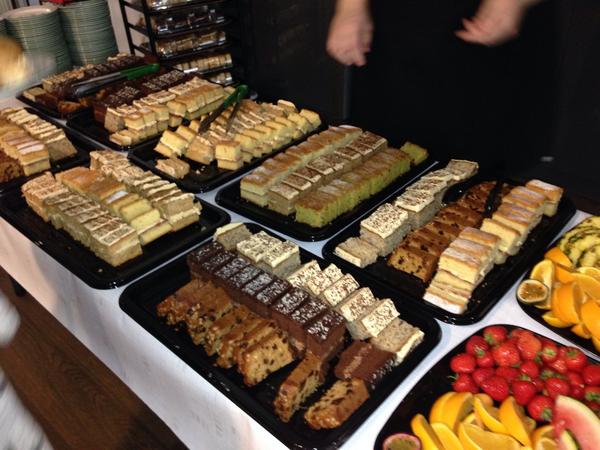
And the food. I had no complaints at all - other than I didn't feel like eating much. No-one needed to go hungry, as proven by this photo of lunchtime cake!

Writing fuel
I could go on, but I'm feeling pretty cream-crackered now. I'll post more over the next few days, but for now, I'm all Yorked out, and I need to rest up if I'm going to be fit for the local author event at Loughborough Waterstones tomorrow (4-6pm - you can order copies of Granny if you haven't already got one, plus chat to around 30 authors from the area) as well as attending the second launch party for KLiCbait vol 1 on Thursday evening in Leicester (7pm onwards in the Parcel Yard, next door to Leicester Station).


Thursday, 5 June 2014

Critical or caring: critiques

When I first began to write, I was convinced that I was writing fabulous stories, full of adventure and mystery that would keep any child glued to the page. How wrong I was. Something like eight years, four professional critiques, numerous beta readers' comments and several courses later, I'm closer to that dream - but still not quite there. Yet.

Critiques have definitely helped, but why do I, and many others, continue to subject ourselves to critique when it can be such an uncomfortable experience sometimes?

1. Because we like to show off. 
Shout it from the rooftops - "I've written a book!"

2. Because we want to know we're producing good stuff.
We need our ego stroked, and affirmation that what we've spent hours slaving over was worth every ounce of effort.

If you're lucky, your mum/dad/significant other/BFF will read what you've written, mainly because it's in their contracts that they have to be nice. You may have a beta reader instead - someone you trust, who will be honest with you, and whose opinion you will at least listen to. Or you can splash the cash and pay for a professional critique, though be careful; go by personal recommendation and reputation, and remember 'you gets what you pays for!'

3. Because we want to be better writers.
It's all well and good getting that warm, fuzzy feeling when someone raves about what you've written. But would they really tell you if they didn't like it? If they couldn't follow the story? If they thought you needed to invest in a dictionary/some punctuation lessons/a dose of reality? How can you learn from your mistakes if you can't see them yourself and no-one will tell you what they are?


Receiving critique/feedback is hard. The first critique I ever paid for slapped my wrist so hard and was so uncomplimentary about my story, I set aside what I was working on for a couple of years, convinced I was completely c**p at writing. When I finally got angry enough at the loss of my dream to start again, subsequent professional critiques were easier to stomach, mainly because they highlighted good things as well as bad, and suggested improvements by providing concrete examples.

Whenever I'm asked to read through someone else's work, I'm intensely aware that I need to be encouraging as well as 'critical', remembering how that first critique made me feel.

Unfortunately, not everyone has the same approach. I've seen a spectrum of responses in critique, ranging from the blandest of comments which don't really say anything about the work just read, to those delivered with all the subtlety of a brick to the head. I've seen critiquers slate the early offerings of new writers, giving no consideration to the courage, first language or educational history of the author. Equally, I've seen critiquers offer entire rewrites of the original, which is tantamount to shouting 'I can do it better than you!' I remember one particular post of mine where that happened - the critiquer even went so far as to say 'I'd love to get my hands on this to edit it!' By 'edit', I assume she meant rewrite...it left a very bitter taste indeed.

But the person requesting the critique is not a helpless pawn in this process, and how they receive the feedback makes a difference too. When you receive feedback that is unexpected or not to your liking, you could:
a) throw your toys out of the pram and hit back at the reviewer, because what do they know anyway? It's your book and no-one's going to notice the spelling mistakes/that the heroine's eyes change colour in chapter 3/that the mystery was never truly solved. You've written a masterpiece and no-one's going to tell you otherwise.
Or b) sulk/cry/eat a ton of chocolate/moan to anyone who'll listen about the unfairness of the review for as long as it takes for you to calm down. Then, you re-read the report and consider respectfully whether the opinion of the reviewer is valid and has any use in improving your work. Only THEN do you reply to the reviewer...

When you're on the receiving end of a critique, Debi Alper's 'rule' of Accept, Amend, Reject is invaluable; if I had a writing desk, rest assured those three words would be framed and hanging above it. As the writer, you have to be open to improving your work and making it the best it can be; very few authors write their first book straight off, with no changes needed. And as some have been heard to say - (paraphrased) overnight success takes years.

So the next time you ask for, or are asked for, a critique, take a deep breath and put a little caring into it. As Mary Poppins said, "A spoonful of sugar helps the medicine go down."

Saturday, 1 February 2014

Thinking about why I write how I write...

If you've followed the Scribbles for a while, you'll know I've had a few problems with getting my writing accepted by agents. 'Nice' is a word that crops up a lot, as well as the phrase 'lacks sparkle'.

In a conversation with an agent recently, who said both of those things (along with some other very lovely feedback and suggestions for possible improvements for Rurik), I was given a challenge to try to find 'sparkle' ingredients.

Said agent asked me to re-read some of my favourite children's stories and try to identify why I liked them so much. Was it the characters? The action? The dialogue? Then, look at what I considered to be the exciting bits in Rurik and decide whether I could see the same things there - and if not, how would I change what was already written?

I find this SO hard to do! I don't know why I enjoy certain books rather than others! I just know that I like it or I don't - if I get sucked in, it's generally because of a mixture of things.

I do know that what I don't like reading - and therefore avoid writing - include some of the following;

1. Long descriptions of people or places (I want to see action!)
2. Characters with stilted dialogue (Oh, Mrs Smith, do you remember that he pursued me to the woods? Oh yes, he chased you for half a mile over Farmer Fairley's fields and you were quite muddy when you got home, were you not?)
3, Convenient storylines (and then the butler appeared with the same knife in his hand so he was the murderer)
4. Ping-pong dialogue (Are you OK? Yes I'm OK. Are you sure? Yes, of course I'm sure - will you stop fussing? I'm not fussing, I'm concerned)
5. Detailed descriptions of action scenes (Jim's right fist thrust upwards as his left leg kicked out towards the bloated stomach of his attacker. The impact jarred Jim to the core but he followed through with a side chop to the larynx...)
6. Cliffhanger endings (The mystery was solved. 'But you are not my son,' Father said. My whole world had just fallen apart. The End.)

Working on the flip side then, that must mean that generally, I like...
1. Lots of subtle little details about people and places that bring them alive.
2. Dialogue that's realistic.
3. A plot that carries me onwards all the time and then makes me go 'oh! I didn't see that coming, but it's so obvious now!'
4. Action that isn't necessarily a fight scene.
5. A complete story - something that ties up enough loose ends to come to a logical conclusion but also leaves enough strands to weave into a new story at a later date.

I thought - hoped - I included these things in my own writing, but feedback continually shows I'm falling short somewhere.

I wonder how much of the problem comes from the fact that as a child, I read 'nice' books? They were gentle stories which took you on fantasy adventures, unlike the rollercoaster rides of action which seem to be pretty popular today. Off the top of my head, I'm remembering the Magic Faraway Tree, Olga da Polga, King of the Copper Mountain...I can certainly see that 'gentler' element in my own creations. Don't get me wrong - I'm not averse to a bit of Alex Rider, or Skulduggery Pleasant, or Artemis Fowl, but I do get exhausted reading them because of their relentless pace! As a result, I don't write that kind of story - my pacing ebbs and flows.

I suppose the question is, are there enough children today who still appreciate a 'gentle' read? Or will I need to change what appears to be my natural (gentler) writing style to fit the (faster paced) market to stand any chance of reasonable success?

Saturday, 7 December 2013

Hooking your reader

After the difference that Les Edgerton's book 'Finding your voice' made to me, I recently bought his book 'Hooked' to peruse as well.


Having received several more rejections of Rurik - in which the sentence 'it didn't really grab me' featured yet again - it's starting to become very clear that I have to do something different to what I am doing in order to catch an agent's attention. I think the opening is probably part of it.

Les talks in Hooked about lots of things you can improve to make your opening the best it can be, but the one I learnt most from was about identifying the 'inciting incident' - the thing that happens in the story that is the REAL reason the main character embarks on the journey that I, as the writer, take them on. He offers some useful examples which made me realise I had not identified the correct 'inciting incident' in Rurik...assuming I've understood this right!

Rurik's story opens with him waking up and cursing the fact he's not 13. He ponders for a while about the death of his father, which has meant the poor kid can't become an apprentice cobbler as planned. There is no money left to buy a new apprenticeship and Rurik's mother must remarry within 12 months to keep her home. So, over breakfast, Rurik's uncle offers to take the boy on as his apprentice instead - only Rurik has no idea what his uncle's job entails.

If Les is reading this, he's probably face-palming right now, because I've just listed at least three of the pet hates of editors and agents about openings; waking up, internal dialogue, eating breakfast...and I didn't even mention the backstory. Sorry, Les.

Laying all that aside, there's actually a bigger problem for me here; I'm struggling to decide what the inciting incident is - is it the death of Rurik's father, which sets off the whole train of events? Or is it actually the moment at which Rurik finds out about the plan for his new apprenticeship?

Gut feeling tells me it could well be the latter, in which case, I have also found my 'story-worthy problem' - the finding of a new apprenticeship. Not, as I'd originally thought, Rurik's adventure to find an object which is lost.

If that's the case, then I need to start my story later. Not much later, granted; but it definitely needs to start at the point where Rurik finds out about the apprenticeship. I feel a rewrite coming on...

If, like me, you're struggling with grabbing your reader from the start, it might be worth looking at Hooked. It might just make the all the difference.

Thursday, 21 November 2013

More about Pixar - and how it can help your writing

A while ago, I blogged about Julie Cohen's session at the York Festival of Writing about using Pixar films to help story structure.

Today, on Facebook, a friend shared this link to more Pixar wisdom on storytelling.

The 'rules' are well worth looking at. As anyone who's watched Wall-E, Up, Cars, Monsters Inc, Finding Nemo, knows (I could go on, there are loads more) they are brilliant visual stories, full of action, (Cars?) get you all emotional (the opening of Up?) and get us rooting for the characters (Wall-E and Eeee-Va).

Everything our writing should have in fact... It's worked for Pixar - will it work for me and you?

Don't know - but I'm off to memorize them all!

Saturday, 9 November 2013

Finding your Voice - and finding mine...

A few days ago, I posted about having lost my voice.

There must've been something in the air that day - a writer friend, having seen three blogs all on the same subject, recommended the book Finding your Voice, by Les Edgerton.


I decided to buy the book. I read it, cover to cover. And boy, did I learn a lot.

This post isn't a book review though - I stuck that on Amazon. Instead, I wanted to share what a difference Les's view of voice has made to my own. I now understand why my own natural voice has turned 'beige' - the sort of technically brilliant, please-everybody stuff that lacks soul; the kind of writing that 'lacks sparkle...isn't commercially viable...isn't strong enough'. Sound familiar? I've certainly heard those phrases more than once before...

Anyway, one of the exercises in the book is to rewrite something you've already written, but only when you think you've begun to recognise your own, unique voice. I'd like to show you the difference it made to mine, using snippets from the first chapter of a new WIP. See what you think of the changes...

Before Les:
In three days time, they’ll tattoo me...
            The thought set Ani’s limbs trembling and she drew her cloak closer. The sun had not long risen above the dunes and there was little heat in it yet; that’s what caused the shiver, she told herself.
            Not the thought of any pain.
            Shifting position, Ani heard only the faint hiss of disturbed sand in the heavy silence of the desert. A movement at the edge of her vision showed another early riser - a brown mottled lizard, emerging from his burrow an arm’s length away.
            It was pure impulse that made her pick up a stone and throw it at the reptile. There was a moment’s satisfaction when, with a flick of tail and a spurt of sand, the lizard disappeared. But then Ani realised exactly what she’d done, and glanced over her shoulder, checking that no-one else had seen.
            Alone again, she hugged her knees and stared into the empty desert.
            Why did she have to be tattooed? It was so… so… unnecessary! There hadn’t been a Listener for thousands of years – there were plenty of oases now, enough for everyone who still chose to live in the desert. But because Baba always stuck to the old ways of the desert, instead of opening his mind - like Uncle Niyall - to some of the ways of the people who lived beyond the sand, Ani had no choice. Bitter frustration sent hot tears coursing down her cheeks.
            When her name was called, Ani didn’t answer. Everyone knew where to find her; under the twisted date tree at the very edge of the oasis, where she was free to dream. And, Ani thought when the caller came into view, it wouldn’t hurt Tulisa to walk off a few of the dates she’d been so keen to consume yesterday evening.
            “You’re to come straight away,” Tulisa gasped, when finally she drew close. “Mommi wants you.”
            Ani considered ignoring the order. But the woman who had filled her mother’s place eleven years ago had a heavy hand, and she had no wish to feel it again today.
            “Did you hear me?”
            “I heard.” With deliberate slowness, Ani rose to her feet and made a show of brushing the sand from her dress while studying her half-sister from the corner of her eye.
            The two girls couldn’t have looked more different. Tulisa was short and round: Ani, a good head taller and slim as a palm tree. Not for the first time, Ani wished she had Tulisa’s golden skin and brown hair, instead of skin the colour of roasted coffee beans and hair the colour of a moonless sky. The girls shared just one physical characteristic – their father’s pale blue eyes. Other than that, they looked just like their respective mothers.
            

After Les:
In three day’s time I’d be tattooed with a lizard on the left side of my neck.
            I didn’t want it to happen. I might have been too young to say no to the piercing, a year ago, but I wasn’t going to give in so easily this time. They couldn’t force me - I’d run away, go and live in the city. Problem was, Baba could – force me, I mean.
            I started to shake. From cold, of course, nothing else.
            Well, that’s what I tried to tell myself. It was because the sun hadn’t been up long and there wasn’t much heat in it yet. I pulled my cloak tighter, disturbing the sand underneath me and making it hiss in the silence.
            What was that? A movement – just a lizard, emerging from his burrow. Daresay he was going to take advantage of the early sun.
            Damn him.
            I picked up a stone and threw it. Ha! Almost!
            I felt a warm glow inside as, with a flick of his tail and a spurt of sand, the reptile disappeared. The glow suddenly froze over as I realised - someone might have seen. A quick glance over my shoulder was all it took to reassure myself I was still alone. I didn’t fancy a beating…
            The sun rose higher, doing little to lift my black mood. It just wasn’t fair! All this fuss, just because centuries ago, we’d had need of a Listener to save us. We were perfectly able to look after ourselves now – well, those of us who still had to live in the desert, anyway.
            I really wished Baba would try the city – Uncle Niyall had. He’d come back with such tales, Baba had nearly had a fit. There was no way he’d go against our traditions. That’s why I already had a great big hole in my ear. Tears of frustration prickled my eyes and spilled down my cheeks.
            “Ani! Ani, where are you?”
            I scrubbed my cheeks dry. They’d sent Tulisa to fetch me. Suppose that was better than Baba. Everyone knew where to find me when I went missing – under the twisted date tree. 
            As she got closer, I could hear Tulisa cursing under her breath. She hated having to fetch me – hated the long walk to the edge of our oasis. At least it walked off a few of the dates she’d stuffed herself with last night.  
            “You’re to come straight away,” Tulisa said when she reached me. “Mommi wants you.”
            For a split second, I thought about ignoring the order. But Hesta had a heavy hand, and I didn’t want to feel it again today. And anyway, Hesta was not my Mommi. She just happened to be my father’s wife.
            “Did you hear me?”
            “I heard you.” Taking my time, I stood up and brushed the sand from my clothes. 

Result for me personally? The second one was written with very few edits - almost off-the-cuff, it felt so...comfortable. And I also discovered that I write pretty natural dialogue - what my characters said needed hardly any changes at all in the rewrite. I'm sure there is more I could do to 'improve' the piece further (I've already received several suggestions - thankfully, none was 'start over'!!) but what was SO different about this second version is that it wasn't hard work. I simply told the story in the way I'd have told it to my kids.

In MY voice.

It was a lightbulb moment. Heck - it was a whole DIY lighting department moment, complete with chandeliers!

So, if anyone's struggling with voice, I'd really recommend Les's book. Read, digest, and make sure you do the exercises - they WILL make a world of difference. I'm off now, to rewrite chapter 2...