Showing posts with label feedback. Show all posts

Saturday, 17 October 2020

Squidge's Guide to Super Stories (and Becoming a Better Writer)

I've mentioned my 'little' non-fiction project a couple of times, and that I've signed a contract for it with Bink. I reckon the time's right to tell you a bit about it!

I've written a guide to creative writing.

Called Squidge's Guide to Super Stories (and Becoming a Better Writer), it's aimed primarily at younger and/or novice writers, and captures the kind of advice I give on school visits or when giving feedback to novice writers. 

I wasn't sure about it to begin with. I mean, I write, yes, but was I really qualified to give advice? When I think of all the 'How to' books I own, written by BIG name authors with many more publications under their belts than me, how would anything I could offer ever stand up next to their advice? How could I dare to lump myself in with some of the amazing editors and writers I know personally, who offer writing advice to paying participants at conferences and workshops?  

I felt like an imposter. Unworthy. 

But gradually, I began to see things differently. I've watched writers I've given feedback to, or helped with editing, go on to be published and win competitions, even before I was published myself. On school visits, the things I've said about how to improve written stories has made a difference to the pupils and what they've managed to produce. And in more recent times, my help has been actively sought for and - to my surprise - I am being paid for it. I've enthused, supported, and enabled many other writers.

So maybe, just maybe, what I have discovered for myself over these years of writing can be of use to others, too.

I pitched the idea to Bink, and they said go for it. 

And I have! Not only have I written, I have drawn - the book will have little sketches dotted through it. 

Like these: 

I have covered idea-finding, process, structure, characters, world building, editing, and writing groups. I've provided prompts to work with, and examples of the kinds of things that I feel improves my own writing and which I hope will help others to make theirs better. It's not an instruction manual though - it focuses very much on the reader finding their own way to be a writer. 

I hope it will be fun to read, and make a difference to those who choose to read it.

Who knows, maybe it'll help write the next bestseller? Exciting times!

Sunday, 11 March 2018

Novel finished, so time to quilt!

Writing news first...

I've finished Rurik-Reeka-Tilda. Hooray! It's taken me almost ten years to really get to grips with this story and make it something I'm really proud of. I sent it out to a few beta readers for a teccy review, and the feedback is about 98% positive. There are always going to be a few niggles and glitches to put right, or consideration to be given to plot points, but on the whole, I'm pretty chuffed with it.

Two out of the three readers returned their comments very quickly - they'd read the novel within 24 hours, so I came up with a new word to describe this...

Pageturneyness.

That is, a measure of how much your reader keeps turning the page - and I'm pleased to say that the Mage of Merjan (yes, the story now has a title) seems to score highly in that regard. (At which point Squidge breathes a huge sigh of relief).

Pageturneyness is second only to Unputdownableness in the authors eyes...

But, having finished the writing, I've given myself a break before I embark on continuing to write the second book in the series. So I went on a one-day Mini-quilting course at Quorn Country Crafts.

Here's what a mini-quilt looks like;

This is a sample of what's achievable, made with one inch squares.
Not for the beginner in this technique! Love the corners on this mini-quilt. 

We were going to make some blocks from one and a half inch squares, ending up with maybe a couple of the designs from this selection;

The block to the left above the blue based block is the one I did...

First task - choose our colours. I'd seen the sample blocks, and decided to try to make some placemats for our new kitchen, which, if you remember, is grey units, black worktops and yellow on certain walls. I had quite a few bits and pieces from both my own and Squidgeling J's projects, so here's what I took with me.


We started by cutting freezer paper into one-and-a-half inch squares (this stuff is like magic - sticks to your fabric when you iron it on and enables really precise cutting). Then, we cut one-and-a-half inch strips of four fabrics and a background colour, which all had to be cut into one-and-a-half inch squares.

3 x four colours, 16 x background

Have to say, I'm not known for being a tidy worker...


For the triangles - or half squares - we used a different tactic. Four-and-a-half inch strips of each of the four colours were sewn to one long strip of background... Opened out and with the seams pressed, we then applied the freezer paper at an angle across the seam so we got perfect triangles of each colour.


Prepping the half square strips to save on waste

Loads more cutting followed, until you had the half-triangle squares, then you could peel off the paper.

Then the fun part. In the next pic, you can just about see the grid we worked on. We cut enough iron-on interfacing to cover 6 x 6 squares. Then, we very - VERY - carefully positioned our patterns of squares over the grid, taking care not to cover the black lines. A bit like when you get a box on a form for your signature, and it says 'Do not go outside of the box'...

These were then carried - oh, so carefully - to the ironing board and ironed into place, with paper above and below to prevent any of the glue transferring onto the iron.

First block of squares stuck to the interfacing

Now, the fun part - actually stitching! You sew a quarter inch seam on the back for every row of squares, cut through the interfacing, iron open, turn 90 degrees and repeat.

Front of block after the first set of seams

Uncut seams on the back

Amazingly, the block shrinks by one and a half inches both ways - and you end up with this;

Finished block!

You'll notice the edge squares look slightly rectangular - that's because they still have a quarter inch seam allowance for the border to be added. I was really impressed though - my triangles were all pretty much perfect!

It took me a while to get to grips with the basic technique, but after that, I was on a roll, and prepped and stuck down three further blocks. I stuck to the same basic pattern, but varied the fabrics in each one while sticking to a mix of grey, black and yellow.

 Today, I've finished them off;

Four blocks, ready to be bordered, backed and bound

It's a great technique, providing you are careful with your ironing and don't melt the interfacing. And get your positions right on the grid. And get all your squares cut up front if you are doing multiple blocks.

The results the other ladies got were fabulous too - some amazing mixes of colours, and using a source book, lots of different pattern possibilities too. I wish I'd had time to take pictures of some of the others... It works best with plain colours or small prints without large areas of space between the printing, and you can blend or contrast the colours to give different emphasis to the block pattern. Huge thanks to Jill for sharing the technique with us and for giving me yet another project to complete...

I'm wondering whether, when I get a chance (!) I can do this kind of thing with lots of different coloured fabrics. A whole block of shades of blue, for example, or reds, or turquoise, perhaps in patterns, perhaps not, and then put those together into a big quilt...

Think I need to write another novel between now and then, though, or the Mage of Merjan will never be joined by the other four books!

Monday, 6 February 2017

A Tale of Two Schools

In my last post, I blogged about the first three days I'd spent at Wolsey Hall Primary School in Leicester.

Last week was definitely a tale of two schools because I spent another three days at Wolsey, followed by an afternoon at Stamford High School in Lincolnshire.

First, Wolsey. The children were beginning to recognise me and greeted me with smiles and waves when they saw me. I had a gift brought to me on Monday - a pencil with a handmade topper - by three of the older girls, and then I had another young lady read me a couple of stories she'd written in her notebook.

As we worked our way down the years, the sessions changed and I used simpler ideas to stimulate the creative writing. Mind you, once again it proved that I'm not a teacher; despite my best intentions to make the activities suitable for all abilities, there are still improvements to be made. I take my hat off to teachers everywhere who do their utmost to engage children of widely different abilities within the same class. Having said that, where activities didn't quite go according to plan for some of the children, the teachers were generous with their suggestions as to how I could create the necessary structure to help the pupils - suggestions which I've taken on board for next time.

On Wednesday, my last day, I'd been allowed to take the two Granny Rainbow books in to sell to anyone who wanted them. The queue blocked the foyer at breaktime...I had a steady stream at lunchtime...and after school, the line wiggled its way from the activity area up to the foyer. It took half an hour to clear it! And even then, one child came back because her mum'd forgotten to bring any money. (I left a box behind at school for anyone who had forgotten their money, and there have been a few more sales since!) Talk about writer's cramp, nearly one hundred books later!

I've had some smashing feedback from staff and pupils, which indicates that in spite of a few minor problems, the children were enthused and inspired and encouraged in their reading and writing. And I've been invited to go back at some point in the future, which is wonderful.


A thank you from Wolsey

 And so to Stamford.

I woke Thursday morning with a bad head (probably due to not eating and drinking properly the day before because of all the book signing!). Fortunately it had cleared sufficiently by 10am, when I packed tens of copies of StarMark and a few Granny Rainbows into a suitcase, organised my sheets and directions to the school.

The journey out was...interesting. A major diversion on the way out added on quite a few miles and about twenty minutes to it, but I got there. Once I'd found the school reception I dropped my suitcase off and went in search of lunch. Stamford is a lovely town, all honey-coloured brick and church spires. It's also got a lot of arty designer and antique shops, so I was relieved to find a Pizza Express which did takeaway nestled among them.


Lunch was eaten in the cemetery of St Michael's Church(the one in the forefront of the photo above), with the late Mr or Mrs Stokes for company.


Then it was back to the school to meet the Stamford High School Book Club in the library.


Huge thanks to the girls, who'd brought flapjack and cookies and sweets to share over a pot of tea. I was quizzed with some really good questions before they headed off to the studio to meet up with the rest of Year 7. Did I mention their  library is in the roof space of a fabulous old building? It's light, airy, and there are brilliant displays by Miss S, the Learning Resource Manager. It was a really lovely place.

The welcome banner the girls had made

The talk to Y7 - all 70 of them - was a brief account of my author journey so far, and then we got stuck into writing.


Remember my paint samples with wonderful titles? We started with those - and the ideas were amazing. Here's a small selection...

Puddle Jumper: every puddle you jump into transports you to a new place or time
Fire Within: a dragon, whose lost her fire
Luck be a Lady: a girl called Luck, who does NOT want to be a lady
Ginger Kitten: a poor kitten who someone tried first to drown, which then got run over (!) and eventually the kitten turns nasty (not surprised!) and attacks people...
Moonlit Pebble: something that looks like a pebble but is in fact a dragon's egg - and it needs moonlight to hatch.
Eye of Horace: an old man (Horace) has had a watch (the eye) all his life, and the watch tells Horace's life story.

Then we used the antique glass bottle story, where more fabulous plans and openings to stories emerged, although I can't remember them! Wish I could... I'm hoping the girls will be able to finish them off at some point in the future - I'd love to read some when they do.

At the end, the girls had an opportunity to buy books - I sold a few StarMarks and a smattering of Grannys and realised I could've taken a considerably smaller suitcase... (On the bright side, at least I have some copies to take to whatever I do in future).


Then it was home again - another eventful journey when I got mixed up between the A606 and A6006 which led to another diversion via Oakham to Melton Mowbray, with a stop off in a Sainsbury's carpark to work out where the Asfordby Road was when I couldn't see any signs for it...

One thing that came out of both school visits is that I need to put my prices up. I've tried to keep them reasonable up to now, as although I'm a full member of the SoA and they recommend what to charge for author visits, I haven't felt that, as a relatively unknown author, I could justify charging hundreds of pounds each visit. But the feedback is coming through loud and clear that what I'm delivering, I should be charging more for. So there's an increase in booking fees on the cards as a result.

But until I get another booking, I'd best do some writing and practise what I preach! Catch you later, Scribblers!

Tuesday, 20 September 2016

York 2016

I had mixed feelings about York this time. For a start, my driving buddy wasn't going this time, so it was a bit different having to lug a case full of books onto the train.

I'd also done a lot of the workshops in previous years and wondered whether there'd be enough new stuff to keep me inspired. That said, there's no harm in going to subjects you have covered before with a different speaker, because you might just pick up a different way of thinking about or approaching the same topic.

And I wasn't doing any 1-2-1's, something I was worried might seem a bit arrogant. A kind of 'I'm published now, so I don't need them' approach, rather than an 'I don't have anything I can show you!' wail of despair (which is actually the reality).

But I went. The best bit has to be that I met so many cloudies again - and others that I'd never met before in real life - and we all sat talking about writing. In my fifth festival, I also found I was also more confident about talking to agents and book doctors and speakers without fearing they'd cut me dead. Maybe they were getting to recognise me, too?

So to the nitty gritty, the learning, the 'what I got out of it'...

Friday afternoon I sat in Brian Keaney's mini course on the golden rules of children's literature. A lot of it I knew already, but what stuck with me was Brian's insistence that you have to address a child you know when telling your story (your own or someone else's), or reconnect with your inner child, something he went into in more depth in a later session about the role of insight in children's literature. I came away wondering what I do - is it my inner child that writes my stories, or do I have a particular child in mind when I write?

We also touched on the issue of 'cross-over' books which appeal to both children and adults. Brian was of the opinion that a lot of adults who read children's fiction are looking for something with a good story that isn't depressing, something I found particularly interesting as StarMark has been read by more adults than children at this point in time. And as I'm a sucker for a happy(ish) ending myself, perhaps I'm unknowingly writing what a lot of adults - as well as children - are craving?

He also observed that often, children are powerless in their world. Stories have to reflect that powerlessness in order to inform and colour the decisions made by the child to shape the story you're telling on their behalf. And remember; children are human beings too.

There were excellent keynote speakers this year. C.L.Taylor, (Home for Christmas, The Missing, The Lie) and Jo Cannon (The Trouble with Goats and Sheep, whose talk I mostly missed because we had to get an earlier taxi to avoid the traffic delays caused by SkyRide York!) both proved that the unthinkable CAN happen if you want to be a bestselling author, but the road is often long and fraught with brutal edits and personal difficulties which mean the overnight success takes years to achieve.

Have to say that although I love hearing different authors' writing journeys, they always tend to be really big names at the Festival. I know that's bound to be a draw, but just once, it'd be great to hear from someone with - I was going to say less success, but of course that's completely wrong! From someone with less of a 'Big 5' approach to the business, because I am certain that most of the audience at York will probably end up as self-pubbed or small press pubbed authors rather than those who are discovered and experience a meteoric rise to fame. It would be no less inspiring to hear of other writing journeys and non-bestseller successes in publication... but perhaps that wouldn't be enough of a draw for the punters.

Julie Cohen's First 100 Words session was a blast! Not only were we given hints and tips on how to grab our reader in the opening few sentences, we were also given the opportunity to send in our first 100 words for Julie's opinion. She gave feedback on 26 previously unread submissions, rattling off first impressions at breakneck speed. Mine was one of them - number 13, but I'm not superstitious. Here's the piece I sent and what I jotted down of Julie's comments:

“All out! All out for Kartalma, if you please!”
            Zanni groaned and stretched. “Why’s he yelling, when there’s only two of us?”
            “I daresay he doesn’t get the chance to do it very often. Few people come this far so he’s making the most of it.” Pa pushed his glasses up his nose and shot a glance at Zanni. “At least it’s not dark yet.”
            “No.”
            Zanni was glad of it; too many of their travelling days had ended with night drawing in and the inside of the carriage being plunged into the kind of darkness which had brought the fear flooding back.

Great - fear of dark there. No backstory and keep backstory shrunk. Keeps us reading on. Where is it happening? Where is Kartalma? More sense of place.

I took notes on all 26 pieces and there were lots of positives as well as points for improvement. Interesting that some of the ones Julie loved, I was a bit 'meh' about - but that just reinforces the subjective nature of the written word and what appeals to different readers.

Thriller Plotting Techniques with Daren King was a strange session. There was lots of really useful tips in it, proving that Daren knew his stuff. But unfortunately he was a very nervous speaker which made it hard to listen to him until he'd begun to relax about half way through the allotted time. Daren introduced many 'concepts' which could be applied to a story to essentially increase the tension in a variety of ways, and I found myself jotting little notes about CKD (my current WIP) as he spoke, because I could see how something I'd already written into the novel's outline could be used to greater effect. There were also some useful definitions of bribery vs extortion (paying someone as opposed to forcing someone) and mystery and suspense (a question mark over the past or present, as opposed to a question mark hanging over the future) that I will be making much use of.

I attended two sessions by C.M.Taylor on Character is Destiny. By which, I mean I didn't do the same one twice - there was a part one and two! Part 1 looked at the golden triangle used by screenwriters to boost the emotional power of plot which I'd taken two years ago. (You can read about it by clicking here) and also introduced the Transformational Arc by Dara Marks. The latter is a device which produces a variation on a character arc within the four act structure, and I have to say I struggle to understand all the different phases. Well, I don't - I can understand them when I see the arc in front of me, but - and this is the pain in the bum bit - I don't know how to apply it to my own writing!

In part 2, Craig looked at how theme could be used to determine a character's destiny in combination with the golden triangle and transformational arc. Basically, when you have the theme of your novel, you can design characters to reflect the theme, oppose the theme, be ambivalent to the theme, or even be the neg of neg, ie someone who thinks they have solved the problem but in fact has not. (Deluded with respect to the theme, maybe?) The more fatuous the theme, the better this works because the more variations on the theme you can introduce. (It's also something I'd heard before in a session with Julie Cohen) Craig gave a great worked example based on a piece he'd been commissioned to write based on the barred list in a London pub.

Mind you, since having come home and tried to tackle the outline of CKD in this way, I got completely disillusioned and despairing because although I can see the events in my novel, I'm not sure whether they are the resistance or exhaustion phase, what my inciting incident is, how I push my character to breaking point...etc etc. I looked on the web to see if I could find anything to help, and surprisingly found a few articles on why the three act structure can actually stifle your creativity and you should focus on the natural story structure instead.

I like that idea a lot more, so I'll work with what I've got whilst sticking to a general intro, build-up, hi point, oh s**t moment, climax and resolution. It's vague enough for this mainly-pantsing writer!

Last of all, I attended Jeremy Sheldon's Endings and How to Climax in any Genre. (I like Jeremy - we shared a table for Sunday breakfast when I was running some ideas past Brian Keaney - and he really knows his stuff when it comes to screenwriting and how you can apply screenwriting tricks to the written word.)

This session came about because often, we focus on grabbing a reader at the start of our book - but do we apply the same effort to giving them a satisfactory ending? Compelling climaxes are decisive (no going back, time running out) substantive (present a risk to self or others) and spiritual (can be moral, psychological or emotional). They require that the protagonist makes a previously impossible choice to gain a slim chance at achieving the impossible. Put simply, the choicemaking has to be the most difficult it can be at this point of the novel. Make your protagonist work for every inch of gained ground until the situation is resolved...or not.

And there you have it. The only other things to report back on are the gala dinner (I wore a tiara thought there isn't much photographic evidence of that fact. Check out Debi Alper's blog for lots of pics of the FoW2016 - I'm in there somewhere), which didn't have dancing this year (boo!) but had lovely food and very good company as always; the futurecast session, where the issue of ebook pricing was hotly discussed though we all agreed to disagree and be polite while we were doing it; several cloudies had full MS requests and there was some very good news on the agent front for another; and last, but not least, I sold 10 of the 14 copies of StarMark I'd taken with me.

Not bad, eh?

Roll on FoW 2017...

Monday, 22 August 2016

Don't forget the competition!

The holiday snaps have begun to trickle in as peeps share with me where they've been reading StarMark. I've decided to extend the deadline to the 14th September, as I realise some schools are still out for the summer until early September, so if you'd still like a chance to win, then check out the rules and enter!

And great news - I've had feedback from StarMark's first young male reader! L, who's almost thirteen gave it a literal thumbs-up and told me "'It was really good - I read it in a week!" So I now know that StarMark appeals not just to girls (as you'd expect from having a female MC) but potentially to boys, too. And Mums. And Grandmas. And Dads...

Hooray!

If YOU enjoyed StarMark, please tell your friends about it or consider leaving a review on Amazon or Goodreads to spread the word.

Enjoy what remains of your holidays xx

Squidge, sailing and StarMark...

Tuesday, 15 March 2016

The publisher's edit.

I mentioned a week or so ago that I'd had the edit of StarMark through from BInk - I sent it back on Monday last, and thought you might like to know something of the process - and what I found out about myself because of it!

I've edited other people's work before, so I know it takes a lot of time to prepare. All those comment boxes, suggesting different ways to write something or what to add in or whether there's a tic (repeated problem) that needs fixing. I've also been on the receiving end of edits too - Writer's Workshop have some amazing editors whose reports have helped several of my friends to snaffle a publication deal. (As did I, after mine...!)

In that respect, I knew what to expect. I also knew to apply the 'Accept, Amend, Reject' rule, but only after careful consideration - it's too easy to have a knee-jerk reaction if the edit is less than complimentary in certain places. I knew to be as objective as possible to get the most out of it. At the end of the day, there is one goal - to make the story the best it can be.

I started by printing out the MS. All 273 pages of it. Warts and all. Then I read it through, taking note of the changes and scribbling in the margins what I might be able to add or alter. Only when I'd done that did I allow myself to work on the electronic copy, accepting insertions and deletions, deleting comment boxes, improving certain scenes, adding extra scenes... It took a heck of a lot longer than I anticipated.

All 273 pages...and a few post-it notes

Comments, insertions and deletions aplenty...
pleased to say not every page had this many!

I did note some interesting things from this particular edit - and all the following examples are lifted straight from the manuscript. Bear in mind some are out of context, so they might sound a little strange in isolation.

1. Sometimes, I'm a lazy writer. There were a few places where it was suggested I expand the scene, because I'd effectively cheated the reader and written a short summary paragraph to tell what was happening instead of really showing the action through Irvana's eyes. On reading through, I agreed; I'd been very lazy in those places.

2. I use participle phrases. A lot. For example - 'Then she raised her head, gazing through swollen eyes at...' The participle phrase causes simultaneous actions, which isn't a good thing. So the sentence becomes 'Then she raised her head and gazed through swollen eyes at...' Mind you, I found that if I wasn't careful, I ended up with a list of 'ands', so sometimes a little more restructuring was needed to lose a few of them.

3. I use disembodied actions quite frequently. eg 'The whispered name brought her head snapping round'. The head doesn't move on its own - it belongs to Irvana, so it becomes 'Irvana looked quickly at Gramma.' Another example; 'A large handkerchief was pressed into her hand.' By who? Or what? See what I mean?

4. POV slips. On the whole, these were quite subtle - it wasn't a case of 'Jane wondered whether she should wear the red dress. Jack hoped Jane would wear the red dress because it suited her better than the blue one.'  More a case of 'When the woman saw the girl standing beside the track, she dug her elbow into the man's ribs.' How does Irvana, whose POV we are in at that point, know that? It has to change to something like 'The woman must have caught sight of her standing by the track because she dug her elbow into the man's ribs.' It made me realise how utterly important it is to stay in your POV character's head all the time.

5. No-one. I always, always write no-one, hyphenated. Throughout the edit, it had been changed to no one, unhyphenated. I did a bit of a straw poll about it, because I wasn't sure if it was an Americanism re formatting, or if there were two ways of writing it (a bit like organised and organized) or if I was just plain wrong. Turns out I'm wrong. But it may take a while to retrain my fingers to leave the hyphen out.

6. American formatting uses em-dashes with no space either side where in the UK, we'd use an en-dash and spaces. Which I didn't realise until I'd marked them all up. Every. Single. One. And I use en-dashes a lot. I discovered it by accident - was reading something and the long line with no space jumped out of the text at me and I realised the book had been published in the US. Then I ran upstairs to look in Jody-Klaire's book (fellow Binkie and awesome author) and sure enough...

There were a whole range of other, more minor things too, but I won't list them all.

Having gone through everything, the edit is now back with BInk, to see whether I've polished up the smuts enough to pass muster, or whether I have to get the Brasso out and go over it one more time for it to really sparkle.

I feel exhausted, elated, excited - and very apprehensive, as StarMark takes another step closer to publication. That's when a whole new experience begins...

Saturday, 20 February 2016

Moving...

Well, not me personally. Things in general, especially (thank goodness) the writing.

You might remember that a week ago, I posted briefly about something I wanted to write not going well, and that the fresh look I was taking at Rurik had stalled too?

I'm pleased to say that since then, Rurik's going better. I've cut around a thousand words already, and the story's feeling a lot tighter and faster-moving. Interesting that some of the characters are behaving a bit differently too... Maybe I'm just getting better at letting them tell their own story, rather than directing it for them?

I'm not sure whether the end result will be worth the rewrite, but there will definitely be improvements made! As I read through, marking up a paper copy, I found myself writing 'bleurgh!' or 'boring!' or 'ugh!' or 'rethink' next to certain sections.

Now, I thought the story was good. I have worked on it A LOT. It had a major edit back in the days when I had an agent interested in my work (though the result of that edit meant that our association ended, so obviously it couldn't have been THAT good...) The second major rewrite came after I did the Writer's Workshop Self-edit Course, after which I posted off to another agent.

Unfortunately, the use of rings as a device in the story let it down; 'too much like Lord of the Rings'. Which it isn't, but the association, once made, is hard to get away from. So I changed the whole 'ring' aspect and focused on powers and mages - instead of being Book 1 of a series called Rurik and the Rings of Issraya (which, as someone pointed out, is not a good title if you have a speech impediment), it became a standalone title called Adventure in Ambak, with the potential to be the first story about Rurik in a series called The Issrayan Chronicles. 

Even then, poor old Rurik's story wasn't getting the nods of approval I was hoping for from agents etc. Not exciting enough, still too nice... So I set it aside, believing that no writing's ever wasted, I've learnt a lot, it doesn't matter if it never gets published...

Who was I kidding? Myself, mainly. Seems I can't give up on it, so Rurik's out of the closet and being pulled into a different shape.

I think Kingstone's made the biggest difference to how I'm approaching this current edit. In Kingstone, I let the characters write themselves, I did a lot of playing around in a notebook before writing up the story, I kept it lean and mean and got into Katia's head...which meant it was her telling her own story, not me. (As an aside, I've had good feedback from beta readers and I'm now waiting to hear back from BInk to see if they think Kingstone is publishable...)

I'm hoping that, as I know Rurik's story inside out by now, I can edit it to be more Kingstone-like in its feel. I'm trying not to be too constrained by what's already there - it's so easy to think 'that bit's good, I'll keep it' when in fact, it doesn't fit the new style and you end up with a disjointed feel to the writing. I am being pretty ruthless and killing lots of my darlings...

I'll keep you posted. Who knows, it might just be Rurik's time...?

Thursday, 4 February 2016

Writing around a language barrier

This morning, I had the privilege of working with 26 ESOL students on a creative writing session. The ladies who attended are learning English as a secondary or other language - they came from Bangladesh, Afghanistan, Portugal, Romania, Poland, Thailand - and other countries beside!

It was a challenge to plan the session, partly because of the language issue; the ladies can speak and write English, but for some of them, it's not fluent. After discussion with the tutor, I came up with a simple plan - an easy starter to get everyone warmed up, a picture prompt for a 'take a walk' exercise to explore the senses, followed by looking at objects the ladies were asked to bring with them to use as prompts for poetry or prose work.

I reckon we could've written a recipe book after the sharing of favourite foods! There were common themes - favourites were often linked to family, to the tradition and culture of native homelands, or to sheer indulgence (95% cocoa chocolate with salt...) But this simple activity got everyone writing and talking and mixing, because two different ability groups had come together specially for the morning.

The picture prompt - that was interesting. Each group worked together to list sights, sounds, smells, tastes and feelings that might be associated with the place. Then, individually, they produced a paragraph or short piece of poetry about the place. We had poetry about fairytale castles, sensory walks through the forest, a description of Loughborough Fair, the beginning of a fairytale for the little house in the woods, and memories of a river that had been swum in during childhood.

This is when I began to realise that some of the ladies were finding it easier to work from their imagination than others, who were still basing their writing on fact.

Now, some of this might have been due to language - it's probably easier to write about what you have experienced and translate that, rather than imagine something that you can't express in the foreign language. But there also seemed to be a cultural element in play. Ladies from certain countries struggled much more with imaginative work than others, something which the tutor has also observed in the past. (We had quite a discussion afterwards about how we could enable or coax the students to make that jump from fact to fiction in a more structured way, especially for those who are not comfortable stepping into an imaginary world.)

And then we got onto the objects. I'd taken a selection with me from India as well as a few bits and bobs from around my house and most of the ladies had brought something from home as well. I saw beautiful hand-decorated fabrics, the most amazing shell sculpture, souvenirs from special places and jewellery, all quite personal objects with strong memories.

After they had shared something about the objects with their groups, it was time to write - and again, there was a distinct split between those who 'got' the creative approach and those who stuck to the facts...

There was a lovely piece of poetry, called Heart With Wings, based on a metal heart with wings that hangs in my lounge. It was deeply felt and written from the heart, covering themes of freedom and fulfilment, I think. A cross-stitched tablecloth, around 50 years old, was the starting point for some beautiful imagery of what the stitcher might have been thinking as she sewed. There were accounts of trips to Mecca and Dubai, and a description of a beautiful jungle and its wildlife which also had an environmental message buried within it. There was also a story about a girl who had dreams of having her own business, but she's now a mother and a housewife and she's lost her dream...

It's always very humbling, I think, when people share their writing, especially if it comes from the heart and personal experience - as so many of the pieces obviously did. I was shown poetry that was full of emotion, which the author felt had lost something in translation. I can't say I noticed - I was moved by the beauty of the imagery in the translated version, so it must have been wonderful in the original.

At the end of the session, I asked the ladies to draw on a smiley face chart. You know the sort - you've got a lot out of it, so big smile. Straight line, you're not certain. Unhappy face...well, then I've failed in my objective to deliver a fun, creative and worthwhile learning experience! Here's what I ended up with on the whiteboard:

The three at the top are my examples...

It was a really lovely morning, and I learnt a lot from it too. Like...how not to underestimate the effect of culture on a learning experience; if traditional culture relies on storytelling for example, those of that culture may be able to join in a creative task more easily than others. I needed to have used a slower pace; it takes a lot of brainwork to write creatively, even more so when you have to convert your thoughts into a language you aren't fluent in and try to maintain the gist of what you are trying to say. And I needed to have included more structure; although I'd picked some of the simpler NIBS exercises, I might have been better using a format I'd normally use in school as a step-by-step to story writing.

The students seemed to have enjoyed themselves though, and I hope that the session will have sown a few seeds for those who'd never attempted creative writing much, or built the confidence of those who already write in their native language to try writing in English too.

And next time, I shall be more aware as a facilitator of the effect of language and culture on a creative writing session...

Friday, 27 November 2015

A whole day of storytelling

I was asked a while ago if I'd be prepared to run a whole day session on creative writing for primary school pupils; there'd be 18 gifted and talented children from 9 schools, all of them in Y5 or 6.

I said yes. It happened yesterday, and it was brilliant!

The timetable for the day was built on a foundation of where we could find inspiration and looking in more detail at world building and characters to put flesh on the bones of a story outline.

I didn't worry too much about spellings and capital letters and full stops. As I pointed out to the children, the way I was taught writing at school was very different to the way it's taught today - I just learnt how to write something that made sense, and I can tell you what a verb, noun, and adjective are. I had no idea what a 'reported clause' was when it was mentioned with respect to dialogue, for example. But when I said that I knew you needed speech marks, and you had to put he/she said after them, one of the children piped up with 'that's the reported clause!'

Oh...

Anyway, even if our spelling did go a bit dodgy at times or we didn't put a comma in quite the right place, we had enormous fun. We made up daft excuses as to why we were late for school; talked about what makes a good book, good; wrote story outlines based on 'The antique glass bottle contained...'; used paint chart colour cards and objects for inspiration; completed character sheets and created a sight-sound-touch-taste-smell picture of the setting that had been chosen.

Outlining a story using three objects from a tin of baked beans, a rainbow sock (of course!)
a police car, a diamond pendant and a length of chain...

Sharing a bit of StarMark when thinking about
where to set a story...

And the best bit - according to 50% of the children on their short feedback sheet, 
completed at the end of the day? 

Writing a story.


A whole story. Just being able to go for it and write the way you wanted, without worrying about any of it being 'right'.

The children had been given free rein, and judging by what they produced as a result, I wonder whether, in our eagerness to teach the component parts of writing, we rather lose sight of the end result? Individuality is lost, because children don't have the opportunity to develop their own style or allow their writing to flow naturally. (Of course, I know that teachers' hands are tied by the requirements of a curriculum that is imposed on them - I'm sure many of them would love to have the time to give the children to develop their creative writing!)

What surprised me most was the sophistication of some of the children's writing; after all the 'building up' work, they had half an hour to start on their final story, then I used a timer to give those that wanted to, a minute to read out some of what they'd produced. Even among 10 and 11 year olds, there were some very distinct voices and styles, ranging from epic fantasy third person to chatty modern first person. There were deep emotions expressed in 'The Vale of Tears' and by the boy with no name, who was hiding in the dark. And there was some very, very accomplished world building on a space station where the character was 16 yans old, and for the 80-year-young girl who was on the run and currently hiding in a cottage in the woods...like she had been before...

We're hoping that the children will go away and finish their stories, so that they can be copied and made into a book as a reminder of the day and their hard work and fabulous ideas. I said I'd write a story too; I quite fancy beginning with 'The antique glass bottle contained goblin snot...' (Thanks, Holywell Emma, for that suggestion!)

It was a huge privilege to share in the creation of so many unique stories and immensely satisfying to see some of the children so enthused and inspired they wanted to do it all again!

There are, of course, some non-writing things I'll remember too... The vibrating cushion. Jooshua (with two 'o's.) The letter to the paint company to ask who comes up with the names on the sample cards.

Using the colour sample names to inspire stories...

And finally, the 'Why I'm at this school today' reasons that had some of the younger pupils at Mountfields believing that there were some rather important visitors from Hogwarts in the playground...

Oh, I DO love being a writer!

Saturday, 3 October 2015

The end is in sight...

I've mentioned King Stone a couple of times on the Scribbles so far - it's my current WIP.

It took 74 writing days (as in, I wrote on each of 74 days a varying amount of words, but not necessarily purely on KS) to write a s****y first draft - going from an A4 notebook filled with notes and sketches and questions and ideas to a typed up version on a memory stick.

It's taken me a further 63 writing days so far (again - not all on KS) to have solidified 22 of the 23 (possibly 24, I'm not sure yet) chapters into something that actually reads like a proper, put-together story. I'm hoping that with a push, maybe in another week, I'll have finished and can lay claim to a completed second draft.

Funny thing is, this 'second' draft is actually more like a first. The first type up was simply me, telling myself the story - the second is the 'real' version. I have a theme, I have strong characters, I have conflict...and, I hope, I actually have good writing.

As I've been going along, I've been sharing the chapters with a few folk, testing the story to ensure everything's hanging together well and my characters are coming across as I want them too. The feedback so far is that it does, although of course there's still a good amount of work needed in places to bring King Stone up to scratch.

I am excited by this story. I was excited by StarMark - still am, as it'll be published next year - and I was excited by Rurik when I started to tell his story. But King Stone...there's a whole different level of something here that I can't put my finger on. Something to do with the fact that my confidence has grown, that I have found a distinct voice as an author, that I have told the story that I wanted to - without any of the 'industry' telling me what I should or shouldn't be writing. It's been an amazingly liberating process, and I hope bodes well for stories I might want to tell in the future.

Who knows? If this 'second' draft gets finished and I leave it to rest for a while, I might even be able to plan something new for NaNoWriMo at this rate...


The King Stone...?

Sunday, 21 June 2015

Book covers - not as simple as you think

You know Granny Rainbow was published last year? And this year, More Granny Rainbow was published too? (You can read all about them here.)

Well, I think I've done something that isn't helping sales - and for anyone about to embark on publishing a second book on a similar theme, or a sequel, well, take note. It might help you to learn from my mistake.

Yesterday, I went to Mountfest, a school summer fair. Here's the stall I set up:


I took both books with me, as I know a lot of parents at the school had bought the first book and their children had loved it; I was hoping they'd buy number two. And of course there are always new folk to introduce Granny to... I also took a game with me, based on one of the new stories (Granny Rainbow and the Froggy Fiasco) as I find a game is a good way to get people to come over to your stall in the first place; then you can strike up a conversation if they eye up the books.

However, at this event, the first few folk who came over glanced at the books and said 'Oh, Granny Rainbow? We've got that one.' And walked away.

Now - I had a grand plan when I decided what the cover of More Granny (MGR) would look like. Like all the best series fiction in bookshops, it would be similar enough to the first book for folks to recognise it as 'belonging' to it whilst being subtly different and unique in its own right. That's why I kept the lovely rainbow striped background, central portrait idea and the typeface Imran used on the original.

However - put both books side by side on a table, AND THEY ARE TOO MUCH ALIKE! I had to start saying 'Oh, you've got the first book? This is a different one, with seven brand new stories!' Or 'Yes, I've written a second book about Granny and Old Tom.'


To me, the differences are obvious. The title and author/illustrator names have been switched, Granny's portraits are different, but the overall impression - that quick first glance - just registers 'Granny Rainbow', not 'More'.


So. If ever a third book's written (it's in the wings, but as sales of MGR are not that good compared to GR, it may never get published) I shall have to rethink the cover to get over that first-glance-itis; turn the rainbow by ninety degrees maybe, to make it really stand out.

If you're reading this and are at the point of designing your own book covers... Well, the best advice I can give you (on top of what's already out there as good practise!) is to have a look at some series fiction; analyse exactly what makes the book covers look like they belong to a set, whilst maintaining their own uniqueness.

Hope that helps - even if it is too late for my own books...

Tuesday, 16 September 2014

#FOW14 - What a weekend!

*This blog post has been thoroughly disinfected and debugged*

Advice for anyone thinking about spending a weekend away on a writing conference - don't go if you've got the lurgy.

To be honest, I'd had a couple of 'meh' days before I went, but I'd had such a busy run-up to York, I put it down to being tired and told myself it would pass. And of course, on Friday, I was so pumped, I felt heaps better and went.

In hindsight, that was probably not such a good idea; I spent two days full of a cocktail of paracetamol and ibrufen, stole copious amounts of loo roll from York Uni to stem the flow from my nose, tried not to hug/breathe on too many friends for fear of passing said lurgy on, and almost did myself an injury attempting to cough quietly in every session I attended.

At least I didn't get a migraine.

Anyway. York. Where to start?

With friends I've met before and those I'd only met in a virtual landscape? Or maybe those I've made during the weekend? It is always lovely and very special to meet up with Cloudies, however fleeting the encounter, but there's also something to be said for the writers you probably would never have met at all, if it weren't for the conference.

What the cloudies do best - support other cloudies in their ventures!

Or maybe meeting with agents and authors? Feeling just a little tingle of pleasure when your face is recognised and they say hello or ask how your day's gone or pass comment on something you said in a session (see - you're not just an anonymous writer - you said something they remembered!) or even tell you that you look gorgeous in your gala frock!

Me having a chat with the lovely Allie Spencer

Perhaps I need to tell you about the 1-2-1, that all important and absolutely terrifying moment when you hear what someone in the business thinks about what you've written; the hard truth about what might need fixing to make the piece sing - or the unbelievable news that the agent wants to see more. This year, my 1-2-1's were not particularly high points, but there were plenty for whom it was and I'm celebrating their success whilst at the same time trying to suss out my own future direction.

How about sharing the moment where I heard the wobble in Matt Haig's voice that spoke of the deeply personal nature of 'Reasons to Stay Alive' when he shared an extract at the keynote closing speech - a wobble I have encountered myself when sharing deeply personal faith experiences with an audience. Matt, you will never now how much I felt for you then: I am so glad you powered on.

Maybe I ought to tell you about the copies of Granny Rainbow I sold and signed alongside the lovely Jody Klaire and her book, The Empath? And stopping Dave Gaughran as he walked past the table on his way to lunch, just to tell him that self-pubbing Granny was entirely down to his workshop last year, when I decided that it wasn't so impossible to get her into print...


The walking advertisement that was Em...

And musn't forget the workshops. They'll probably get posts of their own over the next few days, but suffice to say that I have not come away empty-handed from any of them. They might even have pointed to a major flaw in my approach to writing a novel...but I need to brood on that one a bit more before I share.

Or the work-in-progress you hear about. Why WAS there a red-headed girl in the attic? What will happen to the man who had his toes eaten by leprechauns? Why did the Vikings disappear from Greenland? How does the story end for the mother who has lost her child to a religion there is no turning back from? There are so many 'I'd love to read that!' moments. Especially when you share a table with not one, but three Friday Night Live shortlisters, the lovely Susan Franklin and her 1-2-1 team, AND the author Nick Sheridan!

How about moments of shared experience, like the photoshoot of fellow self-edit graduates? There were plenty of us there, and many others who weren't...but I would highly recommend doing the course. You'll never look at your writing in quite the same way again...

Some of the self-edit graduates with the wonderful Debi and Emma, out tutors.
(Note my flashy silver shoes...!)
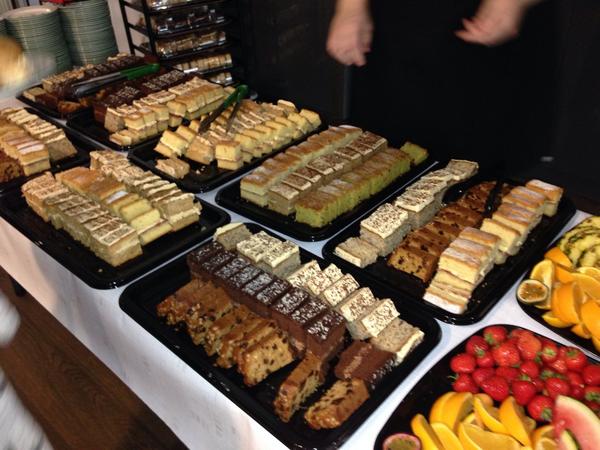
And the food. I had no complaints at all - other than I didn't feel like eating much. No-one needed to go hungry, as proven by this photo of lunchtime cake!

Writing fuel
I could go on, but I'm feeling pretty cream-crackered now. I'll post more over the next few days, but for now, I'm all Yorked out, and I need to rest up if I'm going to be fit for the local author event at Loughborough Waterstones tomorrow (4-6pm - you can order copies of Granny if you haven't already got one, plus chat to around 30 authors from the area) as well as attending the second launch party for KLiCbait vol 1 on Thursday evening in Leicester (7pm onwards in the Parcel Yard, next door to Leicester Station).


Thursday, 21 August 2014

The box of mysteries - and when to reveal them

Can I run a quick question past all you lovely Scribbles readers?

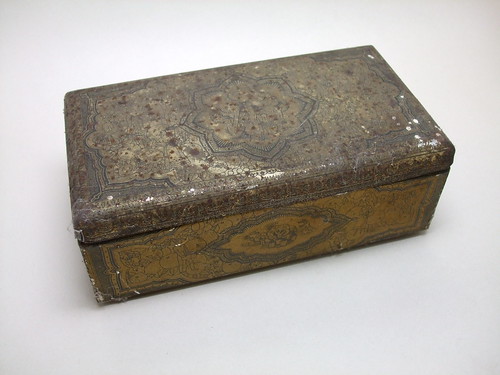
I have a bit of a dilemma. In StarMark, there's a box:

A bit like this one.

The box contains a few items of sentimental value. Their stories can never be told because the owner of the box has died. The reader will 'look' inside this box very early on in the story and 'see' the objects. However, there is one item 'seen' at this point whose significance is revealed much later.

This is a deliberate ploy on my part as the writer: to apparently reveal everything from the start. But recent comments have forced me to rethink whether a big reveal up front is the best way to handle this particular situation.

So - as a reader - would you be disappointed that you'd seen everything straight off? And if you were disappointed initially, would you feel better when the 'Aha!' reveal moment occurred? Or, would you prefer to keep dipping into the box to see a little bit more each time? Prolong the suspense of the reveal?

Thanks in advance for your thoughts.


Saturday, 12 July 2014

NIBS

Our fledgeling writing group now has a name. We are the NIBS. That is, the Nanpantan Improving Body of Scribblers!

We met for the third time last Wednesday (you might remember my last blog post, when I hadn't done my homework...) and it was great to welcome even more new faces to the group. I think we can safely say that this thing isn't going to fizzle and die any time soon!

I don't know whether it was the thought of holidays coming up (we finish school earlier than most folk in England) or the fact we've had such lovely sunny weather recently, but it was a really fun session. From the first exercise of telling a collaborative story (it started with a vicar who dropped the baby in the font during a baptism and ended with the baby sprouting wings and flying up to the church roof, to the dismay of the church wardens!) we laughed and grinned our way through the evening.

We wrote a dialogue in pairs that we acted out (with many a giggle - especially for the vicar who really wanted to be a ballroom dancer!), wrote outlandish excuses which explained why we were late for work (that flying baby played a role again, as did dragons, monkeys driving lorries filled with zoo animals and quicksand in the garden, to name but a few!) and we finished with stories that had to include making a drink (some of which ended up as comforting as the tea itself, and others which ended up used as a murder weapon...)

We are beginning to feel comfortable enough with each other to comment on what we hear shared - gently and with encouragement - and I think it's a testament to everyone present that even those who attend for the first time are willing to share. We don't force people to do so if it makes them uncomfortable or they don't feel confident enough. As we develop, we may have feedback nights, but it's not turning out to be the kind of group that's working with the sole aim of publication and needs critique. I think we just enjoy playing with words and validating the endless notes and scribbles we make, because it feels right and part of us to do so.

Having said that, yes, I'm a published author. But I like the fact that with this group, I can play for a while, experiment, and maybe get a glimmer of an idea that could be a short story or a novel in the future. I also enjoy sharing other author's writing and ideas; it never ceases to amaze me how many different themes stem from just one motif.

Next month will be quieter as we're well into the holidays by that point, and another member has offered to find the exercises. Which is good, because I tend to go only for the ones that appeal to me. We'll also be working on a website and we're already up on Twitter and Facebook as a community page. Our next meeting is the 13th August and I'm looking forward to my homework - rewriting a fairytale from the bad guy's point of view.

So I'm off now, to do some scribbling in the sunshine! Catch you later, fellow scribblers!

Monday, 7 July 2014

First chapter problems

I've recently asked for some feedback on StarMark from a few friends, to see whether I'm finally getting into my MC's head. The answer seems to be 'yes, but you could do better!'

The other problem that's been highlighted in the very first chapter is that my MC is acting a bit too mature for her intended age - an issue that's partly tied up with 'voice'. Problem is, the first chapter revolves almost entirely around the MC. The only other character in this chapter pops her clogs within the first couple of pages, so it's all got to be 'head-stuff' to keep things moving. And I don't do head-stuff well enough to make that work. Yet.

I'm not disagreeing with the feeder-backers - I think they definitely have a point - but I really, REALLY wish that I didn't feel so negative about it! Because I'm not quite sure what to do now. It's getting to the point where I've reworked this first chapter so many times, I'm losing sight of what I wanted to achieve in it. Feels like I'm in a constant edit cycle with no way of getting off at the moment!

I'll use the Accept, Amend, Reject rule, but it may be that StarMark ends up as a bit of a compromise - I get it to where I'm comfortable in the headology department, self-publish and accept that it's not going to be perfect but it's as good as I can make it at the moment without ruining it. Resign myself to doing better with the headology in anything I write in the future. There is also part of me that wonders how much headology a 9-12 year old would expect to read in a book - am I beating myself up about the headology because I'm coming at it from too adult a reader's perspective? Will my young readers mind if they don't get so far inside Irvana's head?

I suppose the only way I'll find that out is to get the story out there. I'm giving myself to the end of the year.

Wednesday, 18 June 2014

Testing, testing...

Bit of a weird post, this, but I need your help...

I've had some problems recently with folk not being able to leave comments on the Scribbles. Now, as I've not changed any settings since I started the blog, and they've always been set to 'anyone' without the need for spambot checks, this was a bit of a mystery. I seemed to get round it by playing with the settings and re-saving, but as I was re-saving them how they always used to be, that didn't make much sense.

Recently, comments have dropped off again. I'm not sure whether this is 'cos I've not posted anything worth commenting on - yep, I know, sometimes I just talk to myself for the fun of it and I don't expect responses all the time anyway. Or - the problem's back.

Please, would you try commenting on this post, even if it's something you don't usually do, just to check that everything's ticketyboo?

You should be able to comment anonymously, through a Google account or via OpenID (whatever that is), and if for any reason you can't comment, would you contact me via microscribbler@gmail.com with any error message.

Thanks for your help. x

Thursday, 5 June 2014

Critical or caring: critiques

When I first began to write, I was convinced that I was writing fabulous stories, full of adventure and mystery that would keep any child glued to the page. How wrong I was. Something like eight years, four professional critiques, numerous beta readers' comments and several courses later, I'm closer to that dream - but still not quite there. Yet.

Critiques have definitely helped, but why do I, and many others, continue to subject ourselves to critique when it can be such an uncomfortable experience sometimes?

1. Because we like to show off. 
Shout it from the rooftops - "I've written a book!"

2. Because we want to know we're producing good stuff.
We need our ego stroked, and affirmation that what we've spent hours slaving over was worth every ounce of effort.

If you're lucky, your mum/dad/significant other/BFF will read what you've written, mainly because it's in their contracts that they have to be nice. You may have a beta reader instead - someone you trust, who will be honest with you, and whose opinion you will at least listen to. Or you can splash the cash and pay for a professional critique, though be careful; go by personal recommendation and reputation, and remember 'you gets what you pays for!'

3. Because we want to be better writers.
It's all well and good getting that warm, fuzzy feeling when someone raves about what you've written. But would they really tell you if they didn't like it? If they couldn't follow the story? If they thought you needed to invest in a dictionary/some punctuation lessons/a dose of reality? How can you learn from your mistakes if you can't see them yourself and no-one will tell you what they are?


Receiving critique/feedback is hard. The first critique I ever paid for slapped my wrist so hard and was so uncomplimentary about my story, I set aside what I was working on for a couple of years, convinced I was completely c**p at writing. When I finally got angry enough at the loss of my dream to start again, subsequent professional critiques were easier to stomach, mainly because they highlighted good things as well as bad, and suggested improvements by providing concrete examples.

Whenever I'm asked to read through someone else's work, I'm intensely aware that I need to be encouraging as well as 'critical', remembering how that first critique made me feel.

Unfortunately, not everyone has the same approach. I've seen a spectrum of responses in critique, ranging from the blandest of comments which don't really say anything about the work just read, to those delivered with all the subtlety of a brick to the head. I've seen critiquers slate the early offerings of new writers, giving no consideration to the courage, first language or educational history of the author. Equally, I've seen critiquers offer entire rewrites of the original, which is tantamount to shouting 'I can do it better than you!' I remember one particular post of mine where that happened - the critiquer even went so far as to say 'I'd love to get my hands on this to edit it!' By 'edit', I assume she meant rewrite...it left a very bitter taste indeed.

But the person requesting the critique is not a helpless pawn in this process, and how they receive the feedback makes a difference too. When you receive feedback that is unexpected or not to your liking, you could:
a) throw your toys out of the pram and hit back at the reviewer, because what do they know anyway? It's your book and no-one's going to notice the spelling mistakes/that the heroine's eyes change colour in chapter 3/that the mystery was never truly solved. You've written a masterpiece and no-one's going to tell you otherwise.
Or b) sulk/cry/eat a ton of chocolate/moan to anyone who'll listen about the unfairness of the review for as long as it takes for you to calm down. Then, you re-read the report and consider respectfully whether the opinion of the reviewer is valid and has any use in improving your work. Only THEN do you reply to the reviewer...

When you're on the receiving end of a critique, Debi Alper's 'rule' of Accept, Amend, Reject is invaluable; if I had a writing desk, rest assured those three words would be framed and hanging above it. As the writer, you have to be open to improving your work and making it the best it can be; very few authors write their first book straight off, with no changes needed. And as some have been heard to say - (paraphrased) overnight success takes years.

So the next time you ask for, or are asked for, a critique, take a deep breath and put a little caring into it. As Mary Poppins said, "A spoonful of sugar helps the medicine go down."